


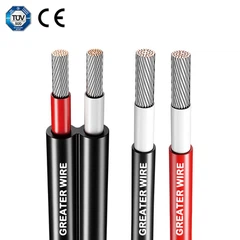

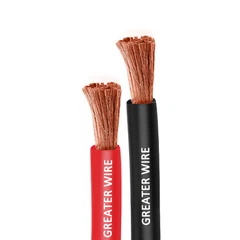
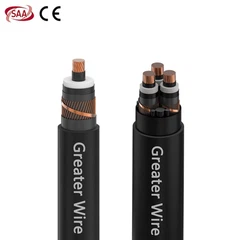
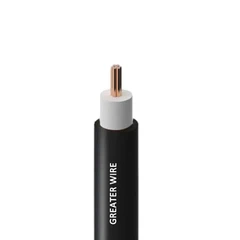
When designing or installing a solar power system, one of the key decisions you'll make is the choice of solar cables. These cables play a vital role in connecting various components of your system, including solar panels, inverters, charge controllers, and batteries. However, a common question that arises is whether a 2.5 mm solar cable, which is typically used in DC circuits, can be used for alternating current (AC) circuits.
In this article, we'll explore the differences between DC and AC electrical systems, whether a 2.5 mm solar cable is suitable for AC, and the considerations you need to take into account when selecting solar wire for both DC and AC applications.

Understanding Solar Cables: DC vs. AC
Before diving into whether a 2.5 mm solar cable is suitable for AC, it's important to first understand the fundamental differences between DC (direct current) and AC (alternating current) systems in solar power systems.
1.1 DC Solar Systems
In a DC solar system, the electricity generated by solar panels is direct current. This means the flow of electricity moves in one direction only, from the solar panels to the charge controller and inverter (if used), and from there to the batteries or load.
The solar cable used for DC circuits must be capable of handling the current produced by the solar panels and efficiently transmitting it to other components in the system without excessive voltage drop or safety hazards.
For example, the 2.5 mm solar cable is commonly used in DC solar systems for short to medium cable runs. It typically has a current carrying capacity of around 20-25A and is designed for low-voltage systems (e.g., 12V, 24V, and 48V).
1.2 AC Solar Systems
An AC solar system is slightly more complex. After the electricity generated by the solar panels is converted from DC to AC (usually by an inverter), it is used to power the household or commercial AC appliances.
AC is the standard type of electricity used in most power grids, and it alternates direction periodically. Since the current alternates in AC systems, there are additional safety and performance factors to consider when choosing cables.

Can a 2.5 mm Solar Cable Be Used for AC?
The short answer is: Yes, but with conditions.
A 2.5 mm solar cable can be used for AC applications, but it is important to ensure that the cable is designed and rated for AC use, not just for DC use. While the cable size and material (typically copper or aluminum) can handle both AC and DC currents, the key lies in the insulation type and the current capacity of the cable in AC circuits.
2.1 Cable Insulation and Safety
One of the most critical aspects of using solar cables for AC circuits is ensuring that the cable insulation is rated for the specific conditions of an AC system. For example:
Solar cables like PV1-F or H1Z2Z2-K are specifically designed for use in DC solar systems, but they may not have the same insulation properties required for safe and efficient operation in AC circuits.
AC cables typically require higher voltage ratings and must be resistant to corona discharge, electromagnetic interference (EMI), and other AC-related hazards. In contrast, solar cables for DC may not be rated for these types of stresses.
Thus, while a 2.5 mm solar wire might be able to carry the current in an AC circuit, the insulation material must be compatible with AC and meet the voltage ratings and safety standards for AC systems. For example, a 2.5 mm PVC cable might be fine for AC circuits at lower voltages (e.g., 120V AC), but a more specialized insulation like XLPE (cross-linked polyethylene) might be necessary for higher voltage AC systems (e.g., 240V AC or industrial systems).
2.2 Current Carrying Capacity in AC Systems
The current carrying capacity of a 2.5 mm solar cable will differ between DC and AC systems. This difference is because the properties of AC and DC currents vary in how they interact with the wire. In AC systems, the cable may experience skin effect, where higher frequencies in AC cause the current to travel along the outer edges of the conductor. This effect can reduce the effective cross-sectional area of the conductor, thereby decreasing its current-carrying capacity compared to DC systems.
In typical DC systems, a 2.5 mm cable can carry up to 20-25A, but for AC, the same cable may carry less current due to these additional factors. As a result, a 2.5 mm solar cable rated for DC may have a lower current rating in AC systems, and it may not be suitable for higher-power AC appliances without additional considerations for voltage drop and safety.
2.3 AC Cable Standards and Regulations
It's also important to note that AC cables have specific standards and regulations that they must comply with. These standards include national and international guidelines for electrical installations, such as:
IEC 60227: For low-voltage cables.
IEC 60332: For fire-resistance standards.
UL 4703: For PV system wiring.
Solar cables, especially those designed for DC circuits, are generally not certified to meet these specific AC standards. Therefore, even though a 2.5 mm cable might be able to carry an AC current under certain conditions, it is safer and more compliant to use dedicated AC cables that are specifically rated for the voltage, current, and safety requirements of your AC system.

Choosing the Right Cable for AC Solar Applications
While it is technically possible to use a 2.5 mm solar wire for AC applications, it is essential to select cables that meet the requirements of your specific AC system. Below are some tips to help you choose the right cable:
3.1 Use AC-Rated Cables
For most AC solar systems, it is recommended to use AC-rated cables such as:
H05VV-F and H07RN-F cables for low-voltage AC applications.
XLPE-insulated cables for medium and high-voltage systems.
THWN-2 or THHN cables for general-purpose AC wiring in industrial applications.
These cables are designed and tested to handle AC safely and efficiently, ensuring that they meet the voltage and current requirements and provide proper insulation to protect against electrical hazards.
3.2 Cable Size Selection
When selecting the right cable size, always consider:
Voltage rating: The cable should be able to handle the maximum voltage of your AC system.
Current rating: Ensure that the cable can carry the required current without excessive heating.
Distance: For longer cable runs, select a larger cable size to minimize voltage drop and ensure optimal performance.
Insulation material: Choose cables with appropriate insulation rated for AC to prevent electrical shock or fire hazards.
3.3 Compliance with Electrical Codes
Ensure that the solar wire complies with local and international electrical codes. For instance, in many countries, AC cables used for electrical installations must be certified by organizations such as UL (Underwriters Laboratories) or IEC to ensure safety.