























Choosing the right solar cable is one of the most crucial decisions when designing or installing a solar power system. The solar wire that connects your solar panels to other components like inverters, charge controllers, and batteries must be sized correctly to handle the current produced by the system without excessive voltage drop, overheating, or safety hazards. One common size used in solar systems is the 2.5 mm solar cable, but how much power (in kilowatts or kW) can this cable safely handle? This question is essential for ensuring the efficiency and longevity of your solar setup.
In this article, we will explore the factors that determine the power capacity of a 2.5 mm solar cable, how to calculate its safe current-carrying capacity, and how to use it effectively in your solar system.
Understanding Solar Cables and Their Function in Solar Systems
Before diving into the specifics of a 2.5 mm solar cable, it's important to understand the role that solar cables play in a solar power system. Solar cables are used to connect the solar panels to other components like inverters, batteries, and charge controllers, and they are designed to handle the electrical current generated by the panels and ensure the safe transport of that energy.
The most common types of solar cables used for these connections are single-core cables, and they have specific characteristics such as:
Current rating: How much electrical current the cable can carry safely.
Voltage rating: The maximum voltage the cable can handle.
Temperature resistance: The range of temperatures the cable can operate in without being damaged.
Durability: Protection against UV radiation, water, and other environmental factors that can degrade the wire.
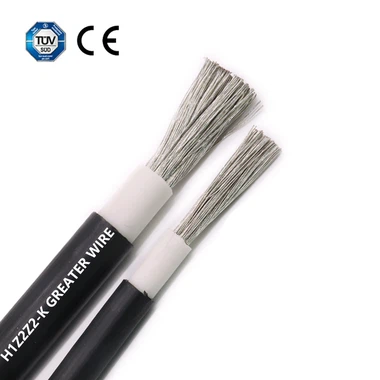
A 2.5 mm solar wire refers to the cross-sectional area of the conductor in the cable, which is 2.5 square millimeters. This size is commonly used for residential solar power systems and is generally suitable for systems with moderate power demands.

CurrentCarrying Capacity of a 2.5 mm Solar Cable
The current rating is the most important specification to consider when determining how much power a 2.5 mm solar cable can safely handle. Current is measured in amperes (A), and it directly influences how much electrical energy (or power in watts) can be transferred through the cable.
For a 2.5 mm solar cable, the typical current carrying capacity is between 20 to 25 amps depending on factors like cable insulation, ambient temperature, and installation conditions.
Factors Affecting Current Carrying Capacity
Several factors affect the current carrying capacity of solar cables, including:
Ambient Temperature: Cables typically have a reduced current capacity in high-temperature environments due to the risk of insulation degradation. For example, a cable that can carry 25A at 25°C might only be able to carry 20A at 40°C.
Insulation Material: The type of insulation used in the cable, such as PVC, TPE, or XLPE, affects its heat resistance and, consequently, its current-carrying capacity.
Voltage Rating: The voltage of the system also impacts the current capacity. For example, in a 12V system, the current will be higher for the same power compared to a 48V system, requiring more robust wiring.
Installation Method: Whether the cable is exposed to direct sunlight, buried underground, or installed inside conduit can influence how well it dissipates heat. This also affects its current-carrying capability.
Current Rating of 2.5 mm Solar Cable
Nominal Rating: A typical 2.5 mm solar cable can safely carry 20A to 25A of current.
Voltage Drop: As the current flows through the cable, a portion of it is lost as voltage drop due to the resistance of the wire. For longer cable runs, the voltage drop can reduce the overall efficiency of the system, and a larger cable may be required to maintain optimal performance.
How Much Power (kW) Can a 2.5 mm Solar Cable Handle?
Now that we understand the current capacity of a 2.5 mm solar cable, the next logical question is: how much power can this cable handle?
The power in a DC circuit is given by the equation:
P=V×I
Where:
P is the power (in watts, W),
V is the voltage (in volts, V),
I is the current (in amperes, A).
Power Capacity Calculation for Different Voltage Systems
Since most solar power systems operate on DC (direct current) and the voltage can vary based on the configuration (e.g., 12V, 24V, 48V systems), we will look at different voltage levels to understand how much power a 2.5 mm solar cable can handle at various currents.
1. For a 12V Solar System:
A 2.5 mm solar cable can safely carry 20A to 25A of current. For a 12V system:
P=12V×20A=240WP
P=12V×25A=300W
So, for a 12V solar system, a 2.5 mm solar cable can safely carry between 240W to 300W of power.
2. For a 24V Solar System:
For a V s24ystem:
P=24V×20A=480W
P=24V×25A=600W
So, for a 24V solar system, a 2.5 mm solar cable can safely carry between 480W to 600W of power.
3. For a 48V Solar System:
For a 48V system:
P=48V×20A=960W
P=48V×25A=1200W
So, for a 48V solar system, a 2.5 mm solar cable can safely carry between 960W to 1200W of power.

When to Use a 2.5 mm Solar Cable?
The 2.5 mm solar cable is suitable for a range of solar power systems with moderate energy needs. It is typically used for:
1. Small Residential Solar Systems
For most residential solar systems that are designed to generate between 300W to 5kW of power, a 2.5 mm solar cable can handle the current and power requirements. It is ideal for connecting solar panels to inverters, charge controllers, and battery banks in systems that require up to 25A of current.
2. Short Cable Runs
For short cable runs (under 10 meters), the voltage drop is minimal, and the 2.5 mm solar wire is sufficient to handle the power requirements of the system. In these cases, the cable provides an efficient, cost-effective solution.
3. Lower Voltage Systems
The 2.5 mm solar cable is also commonly used in 12V or 24V systems, which typically generate less current compared to 48V systems. For 12V systems, this cable size is adequate for generating up to 300W, while for 24V systems, it can handle power up to 600W.

When to Upgrade to a Larger Cable Size
While 2.5 mm solar wire is suitable for many smaller to medium-sized systems, larger systems or systems with long cable runs may require a thicker cable to ensure efficiency and safety.
1. Larger Systems with High Power Output
For systems larger than 5kW or those that generate more than 25A of current, upgrading to a 4 mm, 6 mm, or even larger solar cable is recommended. Larger cables reduce voltage drop and prevent the risk of overheating.
2. Longer Cable Runs
For longer cable runs (more than 10 meters), the voltage drop can become significant, causing energy loss and reducing efficiency. A larger cable size with lower resistance is necessary to minimize the voltage drop and maintain the optimal performance of the system.