

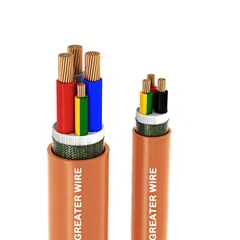
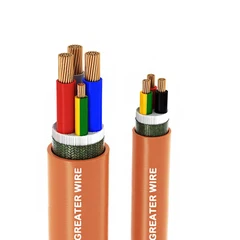

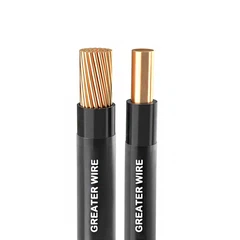
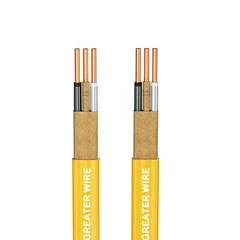
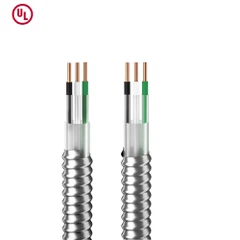
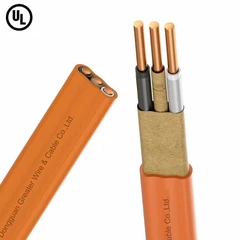
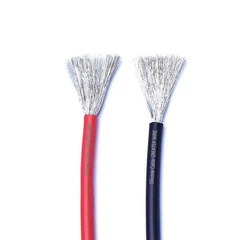
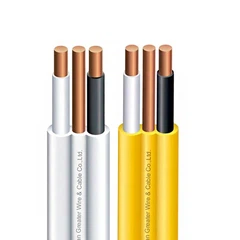
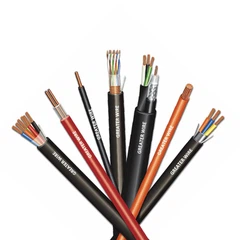
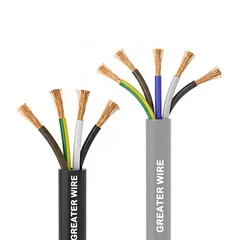
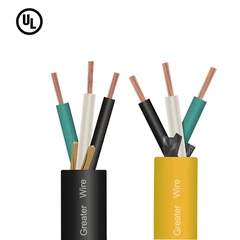
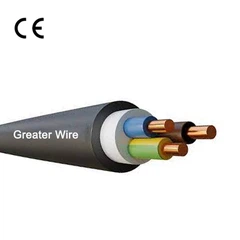

In industrial electrical installations, conduit is commonly used to protect electrical conductors from physical damage. However, installing conduit for every cable run can increase material costs, labor time, and installation complexity.
This raises an important question for electrical contractors, engineers, equipment manufacturers, and procurement teams: Can TC-ER cable be installed without conduit?
Yes. Properly listed and marked TC-ER cable can be installed without conduit in certain applications permitted by the National Electrical Code (NEC). However, this does not mean that every exposed cable run is allowed or that mechanical protection can always be omitted. The cable must meet the applicable requirements for its intended installation, including support, protection against physical damage, and other relevant code provisions.
This guide explains when TC-ER cable can be installed without conduit, which conditions must be satisfied, and how to evaluate cable options for industrial facilities, solar power distribution, and battery energy storage projects.

1. What Is TC-ER Cable?
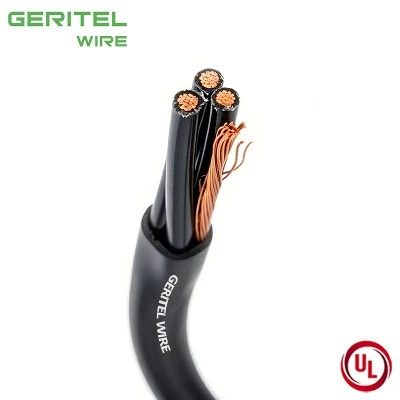
TC-ER stands for Tray Cable–Exposed Run. It identifies a tray cable that is listed and marked for qualifying exposed-run applications in addition to permitted cable-tray installations.
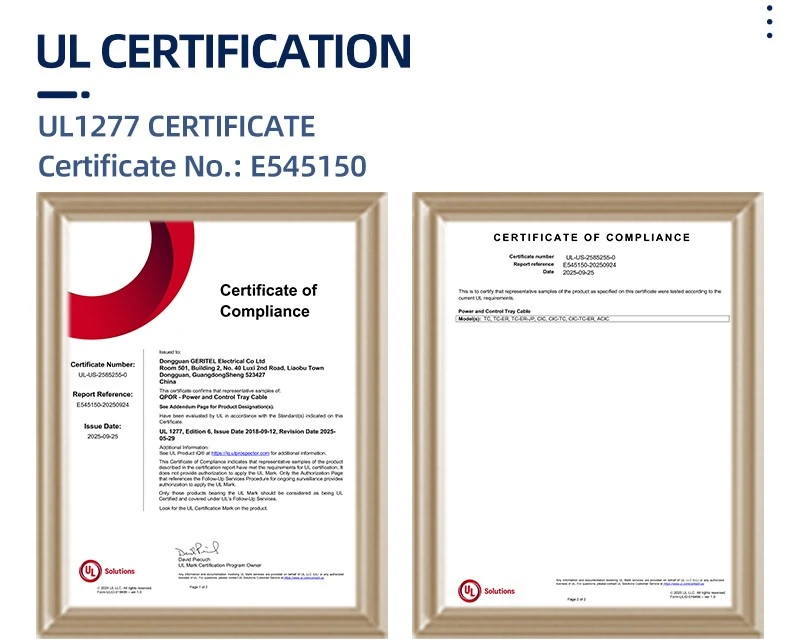
In the United States, UL 1277 is a key product standard for electrical power and control tray cables. Installation requirements are addressed by the applicable provisions of NFPA 70, the National Electrical Code, including Article 336.
Traditional Type TC cable is commonly used in industrial cable trays. TC-ER cable offers additional installation flexibility by allowing certain cable sections to leave the tray and connect to equipment without necessarily being enclosed in a separate conduit.
Typical applications include:
Connections between cable trays and industrial machinery.
Wiring between distribution equipment and control panels.
Power and control circuits in manufacturing facilities.
Connections to motors and other fixed industrial equipment.
Certain exposed connections in qualifying industrial installations.
The actual suitability of a cable depends on its listing, surface markings, electrical ratings, construction, and the installation conditions.
A cable described as industrial-grade or tray-rated should not automatically be assumed to qualify for exposed-run use. Buyers should verify that the exact product is appropriately listed and marked TC-ER.
2. Can TC-ER Cable Be Installed Without Conduit?
Yes, under specific conditions.
NEC Article 336.10(7) addresses the use of Type TC-ER cable between a cable tray, raceway, or enclosure and utilization equipment or devices. The provision establishes conditions that must be met for this type of exposed-run installation.
These requirements are important because the absence of conduit does not eliminate the need to support the cable or protect it against physical damage.
Key Conditions for Conduit-Free TC-ER Installation
1. The cable must be properly listed and marked.
The cable must qualify as Type TC-ER and carry the required "TC-ER" surface marking. A standard Type TC cable without the necessary designation cannot automatically be substituted.
2. The installation must meet the applicable industrial-use conditions.
Under the cited NEC provision, the exposed-run application is permitted in industrial establishments where maintenance and supervision conditions ensure that only qualified persons service the installation.
3. The cable must be continuously supported and protected against physical damage, subject to the applicable exception.
The general requirement calls for continuous support and mechanical protection, using methods such as struts, angles, or channels.
The NEC also provides an exception for qualifying transitions between cable trays and between cable trays and equipment or devices. Where the cable is not subject to physical damage, a transition of no more than 6 feet (1.8 meters) may be permitted without continuous support. The cable must still be mechanically supported where it exits the tray to maintain the required minimum bending radius.
4. The cable must meet the applicable crush and impact requirements.
Under the cited provision, the cable must comply with the specified crush and impact requirements for Type MC cable and carry the TC-ER marking.
5. The cable must be secured at the required intervals.
The cited provision specifies securing intervals not exceeding 6 feet (1.8 meters). The exact installation must also satisfy the applicable support and protection requirements.
6. Equipment grounding requirements must be met.
The applicable NEC provision addresses the equipment grounding conductor within the cable, including specific conditions for conductors sized 6 AWG or smaller.
These conditions should be reviewed against the adopted NEC edition and the exact installation.
For reference, see the NFPA 70 code-development documentation for Article 336.10. This document is code-development material, so installers should consult the adopted code text for the final requirements applicable to their project.
Does "Without Conduit" Mean "Without Protection"?
No. This is one of the most important distinctions in TC-ER cable installation.
Conduit is one method of providing mechanical protection, but the applicable code may permit other protective methods for qualifying installations. For example, properly installed struts, angles, or channels may be used as mechanical protection where permitted.
The correct approach is to assess the installation conditions rather than assume that TC-ER cable can always be left completely exposed.
3. TC-ER Cable vs. Standard TC Cable: Which Can Be Installed Without Conduit?
Although Type TC and TC-ER cable are closely related, their installation permissions can differ.
| Feature | Standard Type TC Cable | TC-ER Cable |
|---|---|---|
| Primary use | Permitted cable-tray and other listed installations | Permitted tray installations and qualifying exposed runs |
| Exposed-run designation | Not established by the standard TC designation alone | Specifically identified by the TC-ER marking |
| Conduit-free installation | Depends on the permitted wiring method | Permitted for qualifying applications under applicable code conditions |
| Mechanical protection | Required as specified by the installation rules | Required as specified, subject to applicable exceptions |
| Typical applications | Industrial power and control wiring in trays | Tray wiring and qualifying connections to industrial equipment |
For example, an ordinary Type TC cable may be suitable for a cable tray but not necessarily for a proposed exposed section between the tray and a machine.
A qualifying TC-ER cable may provide a compliant alternative, provided that all applicable installation requirements are satisfied.
Before purchasing, verify the exact product designation and certification instead of relying on a supplier's general description.
Even when TC-ER cable is permitted without conduit, the installation environment may make additional protection necessary.
Areas Subject to Physical Damage
Cable routed near forklifts, moving machinery, maintenance platforms, sharp metal edges, or heavy equipment may be vulnerable to impact, crushing, or abrasion.
In these locations, the installer must determine how to provide the required mechanical protection. A TC-ER marking does not override the applicable physical-protection requirements.
Outdoor Installations
Outdoor use requires more than an exposed-run designation.
Depending on the location, buyers may need to verify sunlight resistance, wet-location suitability, temperature ratings, and other environmental properties. A cable that is suitable for one outdoor installation is not automatically suitable for every outdoor environment.
Hazardous Locations
Industrial facilities may contain areas with flammable gases, vapors, dust, or other hazardous conditions. Cable selection and installation in these locations are subject to additional requirements.
Do not assume that TC-ER alone authorizes use in a hazardous location. Verify the applicable code provisions, equipment requirements, and required approvals.
Underground or Direct-Burial Applications
A standard TC-ER designation does not automatically establish suitability for direct burial. The cable must be specifically identified for the intended application, and the installation must meet the relevant code requirements.
The same principle applies to wet locations, corrosive environments, and specialized industrial applications.

5. How to Choose the Right TC-ER Cable for Industrial Applications
Selecting a suitable cable requires more than checking whether conduit can be omitted. The cable must match the circuit, installation method, and operating environment.
Voltage and Current Requirements
Confirm the system voltage, expected load, conductor size, and grounding requirements.
Allowable ampacity depends on factors such as conductor material, insulation temperature rating, ambient temperature, the number of loaded conductors, installation conditions, and applicable code rules.
Temperature and Environmental Ratings
Check the cable's temperature rating and whether the product is suitable for wet locations, sunlight exposure, oil, chemicals, or other environmental conditions.
Do not assume that all TC-ER cables share identical ratings simply because they carry the same basic designation.
Construction and Mechanical Requirements
Evaluate the conductor configuration, insulation, overall jacket, shielding requirements, and expected mechanical stresses.
For machinery with repeated movement, verify whether a cable specifically designed for continuous flexing is required. A TC-ER listing alone does not establish suitability for continuous-flex applications.
Certification and Destination Market
For U.S. projects, confirm the relevant UL listing and compliance with the adopted NEC. For projects in Canada or other markets, check the certifications and installation requirements applicable to the destination.
A U.S. cable designation should not automatically be treated as equivalent to an IEC, CSA, or AS/NZS approval.
6. Can TC-ER Cable Be Used for Solar Power Distribution?
Solar installations contain several types of electrical circuits, so cable selection must be based on the specific function.
A Solar Power Distribution Cable specification may involve DC photovoltaic circuits, inverter connections, AC distribution, auxiliary power, or monitoring and control wiring. These applications do not necessarily share the same cable requirements.
Where TC-ER May Be Appropriate
Depending on the circuit, product listing, and applicable code, TC-ER cable may be considered for certain permitted power or control connections associated with solar equipment.
For example, an installation may require fixed control wiring between equipment enclosures or qualifying connections to industrial power equipment.
However, the fact that a cable is suitable for industrial tray wiring does not automatically establish suitability for PV module interconnections or other specialized solar circuits.
What Solar Project Buyers Should Verify
Before specifying a cable, confirm:
The circuit type and maximum operating voltage.
Whether the application involves PV source circuits, inverter wiring, AC distribution, or control circuits.
The cable listing required for the intended circuit.
Sunlight resistance and wet-location ratings where applicable.
Temperature and environmental requirements.
The applicable NEC provisions, including Article 690 where relevant.
The correct cable must be approved for its actual function. TC-ER should not be used as a universal substitute for cable specifically listed for photovoltaic applications.
7. What About Battery Energy Storage Systems?
Battery energy storage systems (BESS) combine battery connections, power conversion equipment, auxiliary power, control circuits, and monitoring systems. Each circuit may require a different cable construction or approval.
A Battery Energy Storage Cable specification should therefore identify exactly where the cable will be installed and what it will connect.
For example:
Battery interconnections may have specific DC electrical and temperature requirements.
Connections to power conversion systems may require cable designed for the relevant power circuit.
Control and monitoring wiring may have different shielding, conductor, and voltage requirements.
Outdoor BESS installations may require suitable sunlight, moisture, and environmental ratings.
TC-ER may be an option for certain permitted fixed power or control connections, but its designation does not automatically establish suitability for battery interconnections or every BESS application.
Always confirm the equipment manufacturer's instructions, the applicable electrical code, and any required product certifications before selecting a cable.
8. Is PVC Nylon TC-ER Cable Suitable for Conduit-Free Installation?
The term PVC Nylon TC-ER Cable describes a possible cable construction, but the material description alone does not determine whether the cable can be installed without conduit.
PVC and nylon refer to materials that may be used in different parts of a cable construction. Their presence does not automatically establish a TC-ER listing, a specific voltage rating, or suitability for a particular environmental condition.
Before selecting a PVC- or nylon-containing cable for an exposed run, verify:
The complete cable designation and required TC-ER surface marking.
The applicable product listing and certification.
Voltage, conductor-size, and temperature ratings.
Required sunlight, wet-location, oil, and chemical-resistance properties.
Mechanical performance and suitability for the installation environment.
Compliance with the adopted code and project specifications.
A cable with an appropriate material construction but without the necessary listing may not meet the project's installation requirements.
For procurement teams, the most reliable approach is to specify the required performance and certification rather than selecting a cable based only on its material name.
9. What About Mining Power Cable Applications?
Mining installations can expose cables to demanding conditions, including impact, abrasion, moisture, vibration, and restricted routing.
A Mining Power Cable specification should identify the type of mining equipment, electrical system, operating environment, and relevant regulatory requirements.
A standard TC-ER cable is not automatically suitable for underground mining, portable mining equipment, or other specialized mining applications. These environments may require cable constructions, mechanical properties, or approvals beyond those associated with ordinary tray cable.
Before considering TC-ER for a mining-related installation, verify:
Whether the cable is intended for fixed or portable equipment.
The required voltage and current ratings.
Mechanical protection and flexibility requirements.
Environmental conditions, including moisture and abrasion.
Applicable mining regulations and equipment approvals.
The cable manufacturer's documentation and recommendations.
Where specialized mining cable is required, selecting a product based solely on its ability to be installed without conduit may result in an unsuitable specification.

10. TC-ER Cable Installation Checklist
Before approving a conduit-free TC-ER installation, use this checklist to review the essential requirements.
Confirm that the exact cable is listed and marked TC-ER.
Verify the adopted NEC edition and applicable installation provisions.
Confirm that the installation qualifies for the intended exposed-run application.
Check the cable's voltage, conductor, temperature, and environmental ratings.
Assess physical-damage risks and provide the required mechanical protection.
Verify cable support and securing arrangements.
Confirm equipment grounding requirements.
Check whether the installation requires additional approvals or a different cable type.
Review the manufacturer's datasheet and installation instructions.
Obtain the necessary approval from the authority having jurisdiction where required.
Completing these checks before purchasing or installing cable can help reduce specification errors, avoid unnecessary rework, and improve project planning.
Conclusion
TC-ER cable can be installed without conduit in certain applications permitted by the NEC, particularly qualifying connections between cable trays and industrial equipment. However, the TC-ER designation does not provide unrestricted permission for exposed wiring.
The cable must be properly listed and marked, and the installation must satisfy applicable requirements for support, mechanical protection, grounding, and environmental suitability. Exceptions to continuous support are limited and depend on the conditions specified in the adopted code.
For solar power distribution, battery energy storage, and mining applications, additional verification is essential because these systems may have specialized electrical, environmental, or regulatory requirements.
The best approach is to begin with the intended circuit and installation conditions, confirm the applicable code and product listing, and then select a cable designed for that specific use.
Find the Right Cable Solution with GERITEL WIRE
Selecting the right cable for a conduit-free installation requires careful attention to certification, mechanical protection, electrical ratings, and operating conditions. GERITEL WIRE, backed by Dongguan Greater Wire & Cable Co., Ltd., welcomes inquiries from electrical distributors, contractors, equipment manufacturers, and industrial procurement teams seeking cable solutions for power distribution, control wiring, and demanding industrial applications. Whether your project involves solar equipment, battery energy storage, or specialized industrial machinery, share your cable specifications, installation environment, destination market, and required approvals with our team. We can discuss your requirements and help identify suitable product options. Contact GERITEL WIRE to discuss your project and request a quotation.
Dongguan Greater Wire & Cable Co., Ltd.
Tel/WhatsApp/Wechat: +86 136 6257 9592
Tel/WhatsApp/Wechat: +86 135 1078 4550
Email: manager01@greaterwire.com
Website: www.greaterwire.com