

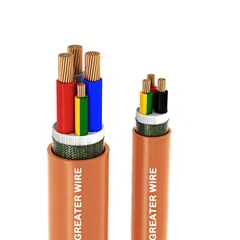
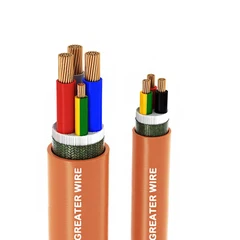

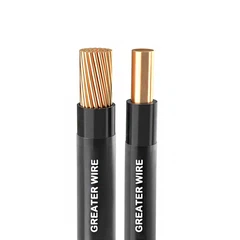
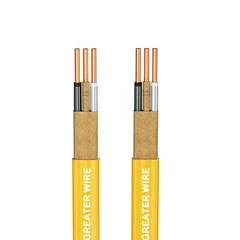
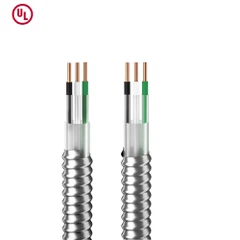
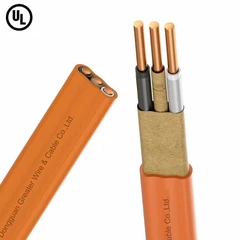
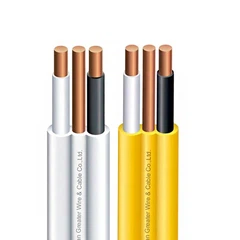
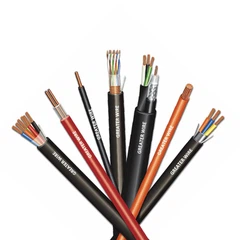
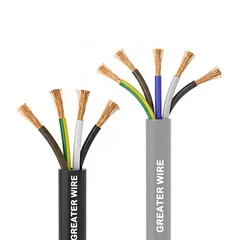
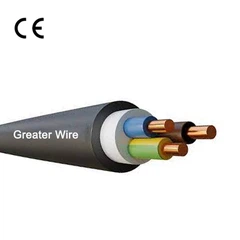
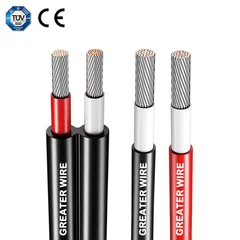

ACWU90 cable is designed for demanding electrical installations, including approved underground applications. However, its outer jacket can still be damaged if the trench contains sharp stones, unsuitable backfill, construction debris, or materials that place excessive pressure on the cable.
Backfilling is therefore not simply the process of covering a buried cable with soil. It is a critical installation stage that helps protect the cable from mechanical damage, preserve its long-term reliability, and reduce the risk of costly repairs.
For electrical contractors, engineers, and cable procurement professionals, the key is to protect the cable before, during, and after backfilling. This guide explains the main causes of ACWU90 jacket damage and the practical measures that help prevent it.
1. Why Is the ACWU90 Outer Jacket Vulnerable During Backfilling?
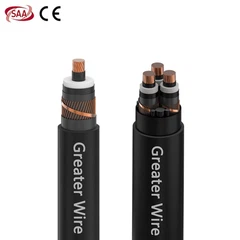
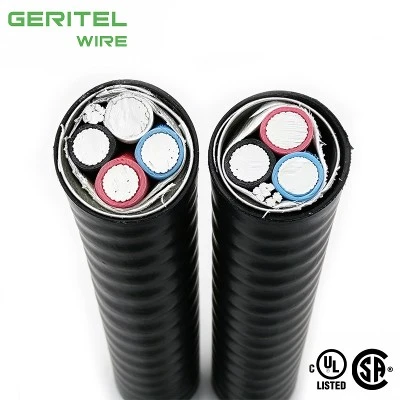
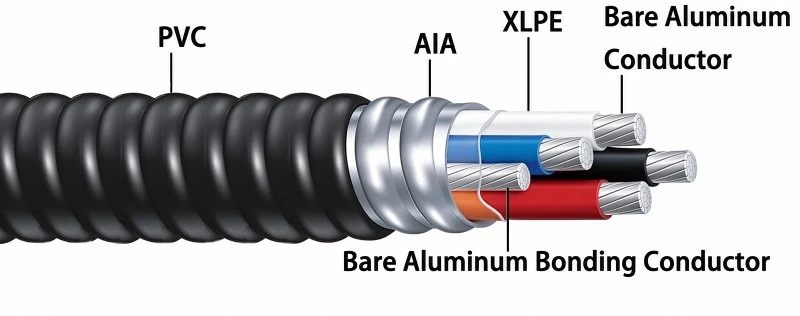
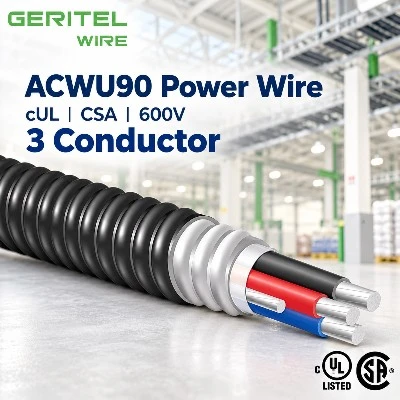
ACWU90 is an armoured cable commonly constructed with XLPE insulation, aluminum interlocked armour, and an overall thermoplastic jacket, often PVC. The exact construction depends on the manufacturer's product specification.
The armour provides additional mechanical protection, but it does not make the outer jacket indestructible. The jacket remains an important protective layer that helps shield the cable assembly from moisture, soil contact, and environmental exposure.
Damage can occur when the cable is exposed to:
Sharp stones and rock fragments: Angular edges can scrape, cut, or puncture the jacket.
Construction debris: Broken concrete, metal pieces, glass, and discarded materials can create concentrated pressure points.
Improper handling: Dragging the cable over rough trench surfaces can abrade the jacket before backfilling even begins.
Heavy equipment: Excavators, loaders, and compactors can strike or crush the cable if used too close to it.
Poorly controlled compaction: Excessive or inappropriate compaction can displace the cable or subject it to damaging loads.
Unsuitable chemical materials: Certain contaminated soils, industrial waste, or aggressive backfill constituents may be incompatible with cable jacket materials.
The important distinction is that ACWU90's armour provides additional mechanical protection, not permission to install the cable in an unprepared trench or bury it in unsuitable material.
2. Prepare the Trench Before Installing ACWU90
Preventing jacket damage starts before the cable is placed in the trench. A clean, stable trench reduces the chance of damage during cable installation and makes it easier to create a suitable protective backfill layer.
2.1 Remove Sharp Objects and Construction Debris
Inspect the trench bottom and sides before laying the cable. Remove materials that could cut, puncture, or scrape the outer jacket, including:
Large or sharp rocks.
Broken bricks and concrete.
Glass fragments.
Metal scraps, nails, and wire offcuts.
Wood pieces with sharp edges.
Construction waste and other foreign objects.
Do not assume that ordinary excavated soil is automatically suitable for direct contact with the cable. Soil containing angular stones or hard debris may damage the jacket under the cable's weight or during later settlement.
2.2 Create a Smooth and Stable Trench Bottom
The cable should rest on a reasonably even, stable surface without sharp projections or abrupt changes in level.
Where the project specification or applicable electrical code requires screened sand or screened earth, prepare the specified bedding layer before placing the cable.
A suitable bedding material should:
Be free from sharp stones and construction debris.
Have a particle size appropriate to the applicable requirements.
Provide reasonably uniform support along the cable route.
Be compatible with the surrounding soil and installation conditions.
Avoid using coarse crushed stone directly against the cable unless the material has been specifically assessed and approved for that purpose.
2.3 Check the Trench for Water and Unstable Conditions
Standing water does not automatically mean an ACWU90 installation is unsuitable, but it can make cable handling and trench preparation more difficult.
Before installation, consider whether the trench has:
Uncontrolled water accumulation.
Soft or unstable soil.
Areas prone to erosion or washout.
Uneven settlement conditions.
Soil contamination that could affect cable materials.
Where differential settlement, frost movement, or unstable ground could impose damaging stresses on underground cables, the installation design should address those conditions.

3. Use Suitable Bedding and Initial Backfill Materials
One of the most effective ways to prevent ACWU90 jacket damage is to separate the cable from unsuitable excavated material using an appropriate protective bedding and initial backfill layer.
3.1 Why Screened Sand or Screened Earth Matters
Screened material has been processed to remove oversized particles and unsuitable debris. It provides a more controlled environment around the cable than unselected excavated soil.
For Canadian installations, the 2024 Canadian Electrical Code (CEC) Rule 12-012 includes requirements for direct-buried cables to be installed adjacent to one another, without crossing, with at least 75 mm of screened sand or screened earth both above and below the conductors. The specified screened sand has a maximum particle size of 4.75 mm.
This requirement is particularly relevant to ACWU90 projects in Canada. It should not be presented as a universal requirement for every country or installation type. Confirm the edition adopted by the local jurisdiction and any applicable amendments before applying it.
3.2 Place the Cable on the Prepared Bedding Layer
After the trench bottom has been prepared:
Install the specified bedding material to the required thickness.
Check that the bedding is reasonably even and free of sharp objects.
Lower the ACWU90 cable carefully into the trench.
Avoid dragging the cable across the trench bottom.
Check that the cable is not twisted, kinked, or resting on a hard projection.
The cable should be supported along its route rather than suspended across gaps or forced against uneven trench surfaces.
3.3 Cover the Cable with Suitable Initial Backfill
Once the cable is correctly positioned, place the specified screened material around and above it.
The first material placed directly against the cable is especially important because it forms the immediate protective environment around the jacket.
Avoid dumping coarse excavated soil, rocks, or demolition debris directly onto the cable. Instead, place the initial backfill carefully and distribute it so that the cable is not struck or displaced.
4. Control Backfilling Procedures to Avoid Mechanical Damage
Even when the trench and materials are properly prepared, poor backfilling practices can still damage the cable.
4.1 Do Not Dump Heavy Backfill Directly onto the Cable
Dropping a large volume of soil or aggregate from a significant height can create impact loads. Large rocks may strike the cable, damage its jacket, or move it from its intended position.
A safer procedure is to:
Place the initial protective material in a controlled manner.
Keep large stones and debris away from the cable.
Distribute the material evenly around the cable.
Follow the project specification for subsequent backfill layers.
The objective is to prevent direct impact and avoid creating concentrated loads on the cable.
4.2 Keep Heavy Equipment Away from the Cable
Excavators and other heavy machinery should not operate directly over an exposed cable or an inadequately protected cable installation.
During backfilling:
Keep excavator buckets and other attachments clear of the cable.
Do not use machinery to push large rocks toward the cable.
Avoid driving heavy equipment over the trench until the required cover and protection are in place.
Follow the engineered construction sequence for any temporary crossing or access route.
The required separation between machinery and the cable depends on the equipment, soil conditions, cover depth, and project-specific protection measures. There is no single safe equipment clearance that applies to every installation.
4.3 Compact Backfill in Controlled Layers
Compaction is necessary on many projects to achieve the required soil density and reduce future settlement. However, compaction must be appropriate for the material, equipment, and cable cover.
Potentially damaging practices include:
Using heavy vibratory equipment directly above a shallow cable.
Applying excessive compaction force near the cable.
Compacting large, hard particles against the jacket.
Allowing equipment to contact the cable or its protective layer.
Follow the civil and electrical project specifications for lift thickness, compaction equipment, and minimum cover before mechanical compaction begins.
Do not assume that every type of compactor or compaction method is suitable immediately above a buried cable.
5. Protect the Cable During Handling and Placement
Backfilling is not the only stage when jacket damage can occur. The cable may already have scratches, cuts, or deformation before it is covered.
5.1 Avoid Dragging the Cable Across Rough Ground
Dragging ACWU90 over gravel, concrete edges, metal surfaces, or rough trench walls can abrade the outer jacket.
Use suitable rollers, cable supports, or controlled reel placement methods where necessary. Keep the cable path clear and prevent unnecessary friction.
5.2 Observe the Manufacturer's Bending Requirements
ACWU90 contains metallic interlocked armour and should not be bent beyond the limits specified by the manufacturer.
Excessively tight bends can distort the cable construction and damage the jacket or internal components.
Before installation, confirm:
Cable outside diameter.
Minimum bending radius.
Permitted pulling tension.
Recommended handling and pulling method.
Do not apply a generic bending-radius value to every ACWU90 product. The applicable limit depends on the actual cable construction and manufacturer instructions.
5.3 Use Suitable Lifting and Pulling Equipment
When handling large or heavy ACWU90 cables, use equipment appropriate to the reel size and cable weight.
Check that:
Reel stands are stable and correctly rated.
Rollers have smooth surfaces and suitable diameters.
Cable guides do not have sharp edges or burrs.
Pulling equipment does not exceed the manufacturer's permitted tension.
The cable does not become trapped beneath equipment or construction materials.
For long cable runs or routes with multiple bends, plan the installation method before pulling rather than attempting to correct cable movement by applying additional force.
6. Inspect the ACWU90 Jacket Before Covering the Trench
A final inspection before backfilling is an important quality-control step. Once the cable is buried, identifying and accessing a damaged section becomes more difficult and expensive.
6.1 What Should Be Checked?
| Inspection item | What to look for |
|---|---|
| Outer jacket surface | Cuts, punctures, cracks, deep scratches, or abrasion |
| Cable shape | Flattening, crushing, kinks, or unusual deformation |
| Armour condition | Visible distortion, displacement, or other signs of mechanical damage |
| Cable route | Contact with sharp objects, unsupported sections, or improper positioning |
| Cable ends | Damage, contamination, or inadequate temporary sealing |
Minor surface marks should not automatically be classified as harmless. Their significance depends on the jacket material, depth, location, and manufacturer's acceptance criteria.
6.2 What Should You Do If Jacket Damage Is Found?
Do not simply cover a damaged section with soil and assume the armour will provide sufficient protection.
Instead:
Stop the backfilling operation around the affected section.
Record the location and visible extent of the damage.
Have the cable condition assessed by a qualified electrical professional.
Consult the cable manufacturer or an approved repair procedure.
Replace or repair the affected section where required, using an appropriate method and compatible accessories.
Reinspect and document the completed work before backfilling continues.
A superficial mark and a deep cut are not equivalent. If the damage reaches the armour, affects the cable construction, or compromises the protective jacket, a qualified assessment is particularly important.
Do not use ordinary adhesive tape, sealant, or an improvised patch as a substitute for an approved cable repair
7. Follow the Applicable Electrical Code and Project Requirements
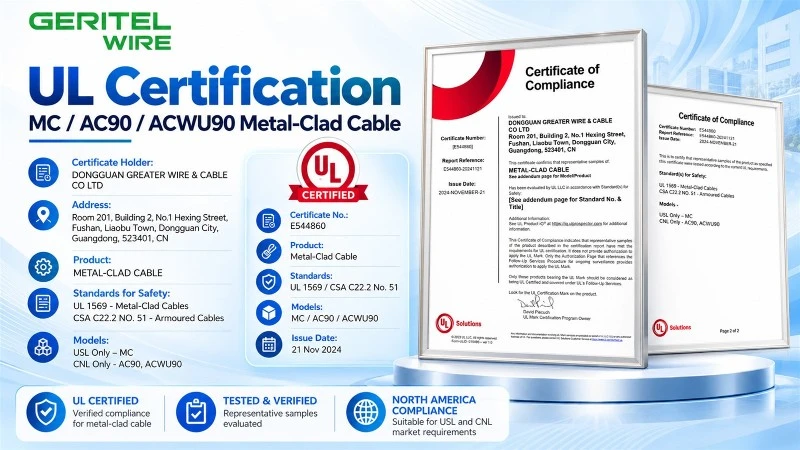
ACWU90 installation requirements depend on the product's certification, intended application, and the electrical rules adopted by the project jurisdiction.
7.1 Canadian Electrical Code Considerations
For Canadian projects, the following provisions are particularly relevant:
CEC Rule 12-012: Addresses underground installations, including burial cover, mechanical protection, and specified screened bedding/backfill requirements.
CEC Rule 12-602: Addresses the permitted use of armoured cables.
CEC Rule 12-606: Addresses thermoplastic-covered armoured cable and the need to avoid exposure to mechanical damage.
The applicable edition and provincial or territorial amendments must be confirmed with the local authority having jurisdiction. The 2024 CEC is not automatically the adopted edition everywhere in Canada.
7.2 Other Markets: Do Not Assume Canadian Requirements Apply
For projects outside Canada, use the electrical installation rules and cable product approvals applicable to the destination market.
For example:
United States: Confirm the cable's listing, permitted installation method, and applicable NEC requirements. Do not assume that a Canadian ACWU90 designation automatically establishes US approval.
Europe: Apply the relevant national wiring rules and product standards for the cable type and installation.
Australia and New Zealand: Confirm the applicable AS/NZS wiring rules, cable suitability, and local approval requirements.
The general practices in this article-removing sharp debris, using suitable bedding, controlling compaction, and inspecting the jacket-are useful installation principles. Exact material specifications, burial requirements, and inspection criteria must still come from the applicable local rules and project documents

8. Common Backfilling Mistakes That Can Damage ACWU90 Cable
The following table summarizes mistakes that contractors and installation teams should avoid.
| Common mistake | Possible consequence | Better practice |
|---|---|---|
| Using unselected soil containing sharp rocks | Jacket cuts or punctures | Use specified screened bedding and initial backfill |
| Leaving debris in the trench | Abrasion or concentrated pressure | Remove construction waste before installation |
| Dragging cable across rough surfaces | Jacket abrasion | Use rollers or controlled cable placement |
| Dropping large rocks onto the cable | Impact damage | Place protective material carefully |
| Compacting too aggressively near the cable | Cable displacement or mechanical damage | Follow the specified compaction sequence |
| Ignoring cable deformation | Hidden damage to cable construction | Inspect before covering |
| Backfilling without final inspection | Damage remains undetected | Complete and document pre-cover inspection |
| Assuming armour eliminates all risks | Jacket damage goes unaddressed | Treat the jacket as an essential protective layer |
9. ACWU90 Backfilling Checklist for Contractors and Inspectors
Use this checklist before, during, and after backfilling.
Before cable installation
Confirm that the exact ACWU90 product is approved for the intended installation.
Check the applicable electrical code and project specifications.
Remove sharp stones, metal, glass, concrete fragments, and other debris.
Check trench stability, drainage, and the condition of the trench bottom.
Prepare the specified bedding material.
During cable placement and backfilling
Use suitable rollers and handling equipment where required.
Maintain the manufacturer's bending radius and pulling-tension limits.
Position the cable without twisting, kinking, or dragging it over rough surfaces.
Place suitable initial backfill around and above the cable.
Keep heavy equipment and sharp materials away from the cable.
Apply compaction according to the project specification.
Before the trench is closed
Inspect the accessible jacket for cuts, punctures, cracks, and deformation.
Arrange professional assessment of any suspected damage.
Confirm cable position and required protective cover.
Record inspection results and installation details.
This checklist is a practical quality-control aid, not a substitute for approved construction drawings, manufacturer instructions, or inspection requirements.
10. Frequently Asked Questions
Can ACWU90 Cable Be Buried Directly in Soil?
Some ACWU90 products are approved for direct earth burial. However, suitability must be confirmed from the exact product's certification, markings, and manufacturer documentation. The installation must also meet the applicable electrical code and project requirements.
Is Sand Necessary When Backfilling ACWU90 Cable?
The answer depends on the jurisdiction and installation method. Under the 2024 Canadian Electrical Code Rule 12-012, direct-buried cables are subject to a specified screened sand or screened earth layer above and below the conductors. Other markets may have different requirements. Always confirm the applicable local rules.
Can Ordinary Excavated Soil Be Used as Backfill?
It may be acceptable for subsequent backfill if it meets the project specification and does not create unacceptable mechanical, chemical, drainage, or settlement risks. However, soil containing sharp stones, debris, or other damaging materials should not be placed directly against the cable.
Does Aluminum Interlocked Armour Prevent Outer Jacket Damage?
No. Aluminum interlocked armour provides mechanical protection, but it does not eliminate the risk of jacket cuts, punctures, abrasion, or damage caused by improper handling and backfilling. The outer jacket must still be protected.
Should ACWU90 Be Inspected Before Backfilling?
Yes. Inspecting the cable before it is covered makes it easier to identify visible damage and arrange corrective action. The inspection should include the outer jacket, cable shape, armour condition, and installation route.
What Should I Do If the ACWU90 Outer Jacket Is Scratched?
The correct response depends on the depth and extent of the damage. A superficial mark may not have the same significance as a cut that exposes or damages the armour. Have the affected section assessed by a qualified professional and follow the manufacturer's approved repair or replacement recommendations. Do not assume that an improvised patch is acceptable.
Conclusion
Preventing ACWU90 outer jacket damage during backfilling requires attention to the entire underground installation process. Start by preparing a clean, stable trench, then use suitable bedding and initial backfill materials to separate the cable from sharp or unsuitable soil. Handle the cable carefully, control machinery and compaction, and inspect the jacket before the trench is closed.
Although ACWU90 is designed with metallic armour and an outer protective jacket, its performance still depends on correct installation. For contractors and project owners, a controlled backfilling process is a practical way to reduce avoidable cable damage, rework, and long-term maintenance risks.
GERITEL WIRE understands the importance of cable construction, product consistency, and application requirements in underground power distribution projects. Whether you are sourcing ACWU90 cables for commercial buildings, industrial facilities, infrastructure projects, or electrical distribution systems, our team can help you review cable specifications and identify suitable product options. Contact GERITEL WIRE to discuss your conductor sizes, cable construction, certification requirements, and project needs. We welcome inquiries from electrical contractors, distributors, OEMs, and international procurement teams.
Dongguan Greater Wire & Cable Co., Ltd.
Tel/WhatsApp/Wechat: +86 136 6257 9592
Tel/WhatsApp/Wechat: +86 135 1078 4550
Email: manager01@greaterwire.com
Website: www.greaterwire.com