

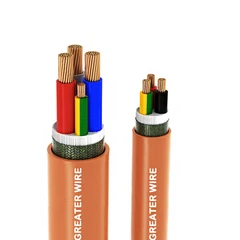
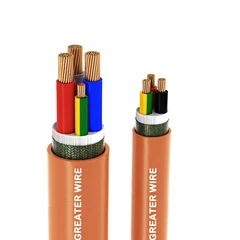

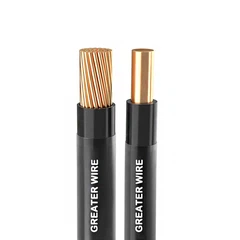
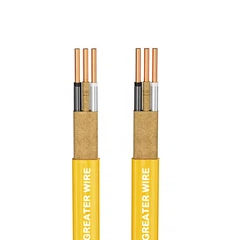



In modern electrical systems, armored cables are widely used in commercial, industrial, and certain residential buildings due to their excellent mechanical protection and installation convenience. Among them, MC Cable (Metal Clad Cable) and BX Cable (also known as AC Cable) are the two most frequently mentioned-and most commonly confused-types.
From the outside, both MC Cable and BX Cable feature a metallic armor sheath that provides strong resistance to impact and physical damage. As a result, they are often mistaken for the same product on job sites. However, in reality, there are fundamental differences between the two in terms of internal structure, grounding method, electrical safety, code compliance, and application scenarios.

What Is MC Cable (Metal Clad Cable)
Definition of MC Cable
MC Cable, short for Metal Clad Cable, is a type of electrical cable that features a continuous metallic armor for mechanical protection. It is widely used in commercial buildings, industrial facilities, and electrical systems where higher safety and durability are required.
In practice, MC Cable is also commonly referred to as MC electrical cable or MC wire.
The defining characteristics of MC Cable include:
Individually insulated conductors
A separate grounding conductor
A metallic armor that provides physical protection
These features make MC Cable one of the most reliable and code-compliant wiring solutions in modern electrical installations.
Structure of MC Cable
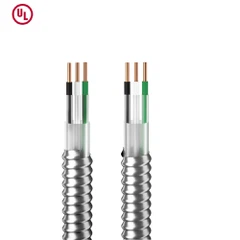
A typical metal clad cable consists of the following components:
Conductors
Usually copper conductors, available in solid or stranded form depending on current capacity and flexibility requirements.
Insulation Layer
Each conductor is individually insulated, commonly with THHN/THWN or XLPE materials.
Separate Grounding Conductor
This is one of the most critical differences between MC Cable and BX Cable. A dedicated grounding conductor significantly improves grounding reliability and system safety.
Metal Armor Sheath
Typically made of aluminum or galvanized steel, helically wrapped around the conductors to provide mechanical protection and installation flexibility.
Main Types of MC Cable
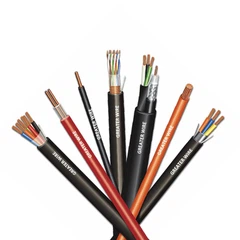
Depending on application requirements, MC electrical cable can be classified into several types:
Power MC Cable for lighting and power distribution
Fire Alarm MC Cable for life safety systems
Control and Instrumentation MC Cable for signal and control circuits
Together, these variations make MC wire suitable for a wide range of electrical installations.
Key Features of MC Cable
Excellent mechanical protection
Independent grounding conductor for higher safety
Suitable for both exposed and concealed installations
Easier compliance with modern electrical codes
What Is BX Cable (Armored Cable / AC Cable)
Definition and Background of BX Cable
BX Cable is an earlier form of armored cable and is commonly known in the North American market as AC Cable (Armored Cable). It was widely used in early building electrical systems due to its ability to be installed without conduit.
Structure of BX Cable
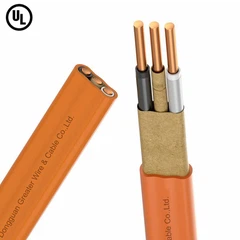
A typical BX Cable includes:
Insulated conductors
A metallic armor sheath
A bonding strip used for grounding purposes
Unlike MC Cable, BX Cable generally does not include a separate grounding conductor.
Grounding Method of BX Cable
BX Cable relies on the metallic armor and bonding strip to serve as the grounding path. While this method can meet basic grounding requirements under ideal conditions, it is less reliable than a dedicated grounding conductor, especially over long-term use or if installation quality is compromised.
Limitations of BX Cable
With continuous updates to electrical codes, the use of BX Cable in new construction projects has gradually declined due to:
Less reliable grounding compared to MC Cable
Higher sensitivity to installation quality
More limited acceptance in modern electrical standards
Key Differences Between MC Cable and BX Cable
Grounding Comparison
MC Cable: Uses a separate grounding conductor, offering higher safety and reliability
BX Cable: Relies on armor and bonding strip for grounding
Structural Differences
MC Cable features fully insulated conductors and a modern design consistent with current metal clad cable standards, while BX Cable reflects an older structural concept.
Electrical Safety and Performance
In terms of fault current handling and long-term reliability, MC Cable generally outperforms BX Cable, making it the preferred choice in commercial and industrial applications.
Code Compliance
In many regions, MC electrical cable is more readily accepted under current electrical codes, while BX Cable is subject to increasing restrictions.
Performance Comparison Overview
Mechanical protection: MC Cable is superior
Grounding reliability: MC Cable is more dependable
Installation flexibility: MC Cable is easier to work with
Long-term safety: MC Cable provides better performance

Typical Applications of MC Cable
Commercial Buildings
Office buildings, shopping malls, and hotels for lighting and power distribution.
Industrial Facilities
Factories, equipment rooms, and control rooms where durability is essential.
Fire Alarm and Life Safety Systems
Fire Alarm MC Cable helps maintain circuit integrity during fire conditions.
Special Installation Environments
Exposed installations, ceilings, shafts, and areas with dense wiring.
Typical Applications of BX Cable
Renovation of older residential buildings
Low-load and low-risk applications
Projects with limited maintenance budgets
How to Choose Between MC Cable and BX Cable
When selecting between MC Cable and BX Cable, consider the following factors:
Project type and electrical code requirements
Grounding and safety expectations
Installation environment
Long-term maintenance and reliability
For most new construction projects, MC Cable is the preferred solution.
Although MC Cable and BX Cable are both armored cables, they differ significantly in structure, safety, and application.
MC Cable (Metal Clad Cable), with its separate grounding conductor and higher electrical safety, has become the mainstream choice for modern electrical systems.
For engineering projects and international procurement, understanding the characteristics of mc cable, mc wire, and mc electrical cable is essential for making safe, compliant, and long-term cost-effective decisions.
At Dongguan Greater Wire & Cable Co., Ltd., we offer premium Metal Clad Cable (MC cable) solutions designed for robust performance, safety, and long‑lasting reliability in a wide range of electrical applications. Our metal clad cables feature high‑quality copper multi‑core conductors encased in tough aluminum or steel interlocked armor, providing excellent resistance to mechanical damage, heat, moisture, and corrosion - making them ideal for demanding environments where durability and protection matter most.
Certified under rigorous UL standards (UL 83, UL 1569, UL 1685) and backed by over 30 years of manufacturing experience, our MC wire delivers dependable performance and meets international quality benchmarks including TUV, SAA, CE, EU CPR, and ROHS - ensuring safety and compliance on projects worldwide.
Whether your project calls for power, control, or signal wiring, our experienced team is ready to support you with professional product guidance, fast quotations, and dedicated service. Contact us today to discuss custom configurations and enhance your project with high‑quality MC cable solutions.
📞 Tel / WhatsApp / WeChat: +86 135 1078 4550 | +86 136 6257 9592
📧 Email: manager01@greaterwire.com