

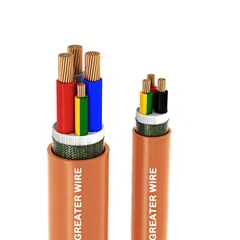
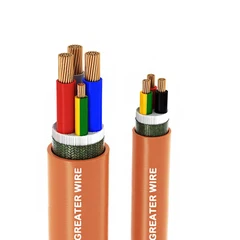

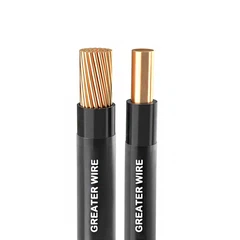
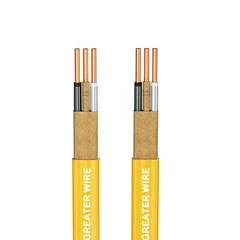
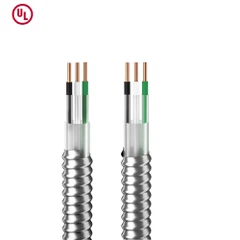
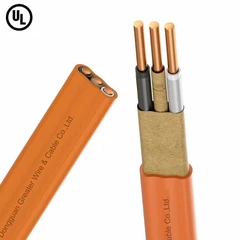
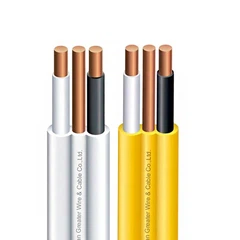
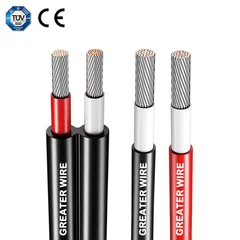

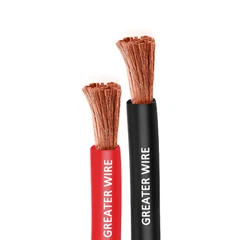
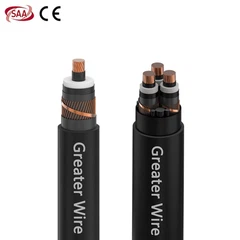
ACWU90 cable is widely used in Canadian electrical installations, including underground feeders, service entrance wiring, and industrial power distribution. Its aluminum interlocked armour and PVC outer jacket make it suitable for demanding installation environments, including direct burial when the specific cable product is approved for that application.
However, choosing ACWU90 cable does not automatically determine how deep it must be buried. The required burial depth depends on the applicable electrical code, cable voltage rating, installation location, and whether the cable is installed beneath an area exposed to vehicle traffic.
So, what is the correct burial depth for ACWU90 cable?
Under the 2024 Canadian Electrical Code (CEC), Table 53, a typical 600V ACWU90 cable installation requires a minimum cover of 450 mm (18 inches) in non-vehicular areas and 600 mm (24 inches) in vehicular areas.
This guide explains the applicable requirements, how to measure burial depth correctly, and what contractors and electrical distributors should consider before specifying ACWU90 cable for underground projects.
1. What Is ACWU90 Cable and Why Is It Suitable for Direct Burial?
Before discussing burial depth, it is important to understand what ACWU90 cable is and why it is commonly selected for underground electrical installations.
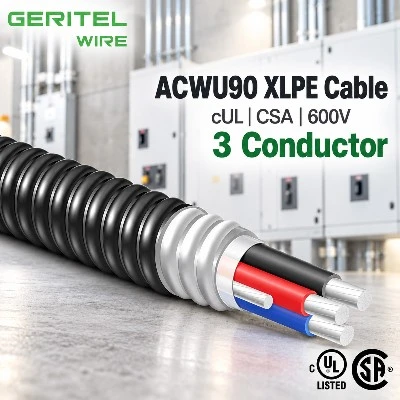
ACWU90 is a Canadian electrical cable designation. It generally refers to an aluminum-conductor, cross-linked polyethylene (XLPE)-insulated, armored cable with a 90°C conductor temperature rating.
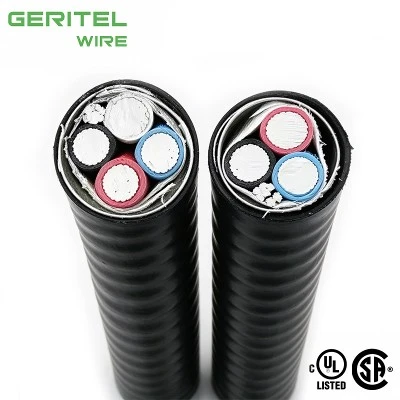
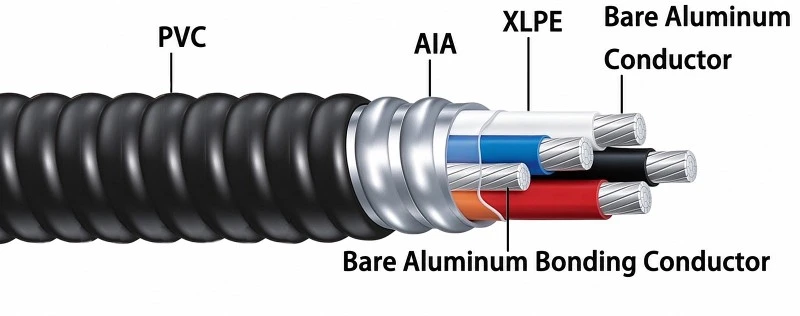
A typical ACWU90 cable consists of several components:
Conductor: Aluminum conductors provide electrical power transmission while offering a relatively lightweight and economical alternative to copper.
Insulation: XLPE insulation provides electrical insulation and supports a 90°C conductor temperature rating under applicable conditions.
Bonding conductor: Depending on the cable configuration, a bonding conductor provides the required grounding and bonding path.
Armor: Aluminum interlocked armour (AIA) provides mechanical protection against external damage.
Outer jacket: A PVC jacket provides additional protection against moisture, abrasion, and environmental exposure.
The combination of these components makes ACWU90 suitable for various electrical applications.
Common applications include:
Underground power distribution.
Direct-buried electrical feeders.
Commercial and industrial building services.
Electrical service entrance installations.
Outdoor electrical equipment connections.
Wet and damp locations where the cable is approved for the application.
However, not every cable carrying an ACWU90 designation should automatically be assumed suitable for direct burial. Buyers and installers should verify the manufacturer's product specifications, CSA certification, and applicable markings before installation.
2. What Is the Minimum Burial Depth for ACWU90 Cable?
For Canadian installations, the primary reference is the Canadian Electrical Code (CEC), particularly Rule 12-012 and Table 53.
Table 53 specifies the minimum cover requirements for direct-buried cables and insulated conductors installed in raceways.
ACWU90 is a metal-armored cable. Therefore, its burial depth is determined using the requirements for cables having a metal sheath or armour, provided the product and installation meet the applicable conditions.
Under the 2024 CEC Table 53, the minimum cover requirements for low-voltage and extra-low-voltage installations are:
| Installation condition | Minimum cover |
|---|---|
| Non-vehicular areas | 450 mm (18 in) |
| Vehicular areas | 600 mm (24 in) |
These values apply to the relevant metal-armored cable category, which includes ACWU-type cables.
2.1 ACWU90 Burial Depth in Non-Vehicular Areas
For areas without vehicle traffic, the minimum cover for qualifying low-voltage ACWU90 installations is 450 mm (18 inches).
Typical non-vehicular locations include:
Residential lawns.
Landscaped areas.
Pedestrian walkways not subject to vehicle traffic.
Certain commercial landscaped areas.
Although these locations generally experience lower mechanical loading than driveways or roads, adequate burial depth remains important.
Landscaping work, gardening equipment, future excavation, and other ground disturbances can damage underground electrical cables.
Therefore, installers should also consider the likelihood of future excavation and any additional protection required by the project specifications.
2.2 ACWU90 Burial Depth in Vehicular Areas
Where ACWU90 cable is installed beneath areas exposed to vehicle traffic, the minimum cover increases to 600 mm (24 inches) under the applicable 2024 CEC Table 53 requirements.
Examples include:
Residential driveways.
Commercial parking lots.
Vehicle access roads.
Industrial yards.
Areas used by construction or maintenance vehicles.
Vehicles can create additional mechanical stress on underground installations. The increased cover helps protect the cable against potential damage from external loads and subsequent ground disturbance.
For projects involving heavy vehicles, unusual loading conditions, or specific utility requirements, additional mechanical protection or greater burial depth may be necessary.
2.3 ACWU90 Burial Depth with Mechanical Protection
The CEC also permits a reduction in minimum cover when qualifying mechanical protection is installed above the underground cable.
Under Rule 12-012, the minimum cover may be reduced by 150 mm when the required mechanical protection is provided.
Examples of qualifying protection include:
Treated wooden planking at least 38 mm thick.
Poured concrete at least 50 mm thick.
Concrete slabs at least 50 mm thick.
Concrete encasement at least 50 mm thick.
Other suitable materials permitted under the applicable Code provisions.
For flat mechanical protection, the material must extend at least 50 mm beyond the cable or raceway on each side.
Based on the standard Table 53 values, the resulting minimum cover can be:
| Installation condition | Standard minimum cover | Minimum cover with qualifying mechanical protection |
|---|---|---|
| Non-vehicular areas | 450 mm | 300 mm |
| Vehicular areas | 600 mm | 450 mm |
These reduced values should not be treated as automatic alternatives. The mechanical protection must satisfy the applicable CEC requirements, and local electrical authorities must accept the installation.

3. How Is ACWU90 Cable Burial Depth Measured?
One common installation mistake is measuring the trench depth instead of the actual cable cover.
The Canadian Electrical Code defines minimum cover as the distance between the top surface of the cable or raceway and the finished grade.
In other words, the measurement starts at the uppermost surface of the installed cable and ends at the final ground surface.
For example, if a 600V ACWU90 cable is installed in a non-vehicular area, the required minimum cover is 450 mm.
This means there must be at least 450 mm of material between the top of the cable and the finished ground level.
It does not mean that the trench itself must be exactly 450 mm deep.
The actual trench depth must also accommodate the cable diameter, the required bedding material, and any other installation provisions.
3.1 Understanding Cable Cover vs. Trench Depth
These two measurements are different:
Cable cover: The vertical distance from the top of the cable to the finished ground surface.
Trench depth: The total vertical distance from the finished ground surface to the bottom of the excavation.
For direct-buried ACWU90 cable, the trench must be deep enough to accommodate the required cable cover and the specified bedding beneath the cable.
This distinction is important when preparing excavation plans, calculating material quantities, and checking installation compliance.
4. What Other Installation Requirements Apply to Direct-Buried ACWU90 Cable?
Correct burial depth is only one part of an underground cable installation.
Rule 12-012 of the 2024 Canadian Electrical Code also addresses mechanical protection, cable arrangement, backfill materials, and other installation considerations.
4.1 Provide Suitable Bedding and Backfill
Direct-buried cables must be installed with suitable screened sand or screened earth.
Under Rule 12-012, the installation requires:
Screened sand with a maximum particle size of 4.75 mm, or screened earth.
At least 75 mm of this material below the conductors.
At least 75 mm of this material above the conductors.
This bedding arrangement helps reduce the risk of mechanical damage from stones and other hard materials during backfilling and subsequent ground movement.
Installers should also follow project specifications for backfill quality, compaction, and additional protection.
4.2 Avoid Crossing Direct-Buried Cables
Direct-buried cables should run adjacent to one another rather than crossing over each other.
Crossing cables can create localized pressure points, particularly when hard materials or compacted soil are placed above the installation.
Proper cable arrangement helps reduce unnecessary mechanical stress and makes future identification and maintenance easier.
4.3 Protect Cable Risers and Termination Points
Underground cables often transition from buried installations to above-ground electrical equipment.
These transition points can be more exposed to accidental impact, mechanical damage, and construction activities.
Where cables rise for terminations or splices, Rule 12-012 specifies appropriate protection methods, including rigid conduit or other acceptable mechanical protection.
The protection must extend to the heights required by the applicable Code provisions.
4.4 Install Underground Warning Tape
Warning tape is an important additional safety measure for underground electrical installations.
It helps alert excavation workers to the presence of buried electrical infrastructure before they reach the cable.
However, warning tape does not replace the minimum burial cover or the mechanical protection required by the electrical code.
Installers should follow the applicable code provisions and project specifications for warning tape placement and identification.
5. Does the 915 mm Burial Depth Apply to ACWU90 Cable?
Electrical contractors and cable buyers sometimes encounter a burial depth of 915 mm (36 inches) in Canadian underground cable documentation.
This number can cause confusion because it is not the standard minimum cover requirement for every ACWU90 installation.
For example, Alberta electrical ampacity guidance has used a burial depth of 915 mm as an assumed installation condition when determining underground cable ampacity using the applicable CEC calculation tables.
This is a thermal calculation reference, not a universal minimum burial-depth requirement.
The distinction is important:
Minimum burial cover is primarily concerned with the physical protection of underground electrical installations.
Burial depth used for ampacity calculations is an assumed installation parameter that affects how effectively the cable dissipates heat into the surrounding soil.
If an underground cable is installed at a depth different from the assumptions used in the applicable ampacity tables, the electrical designer may need to perform a more precise ampacity calculation.
Therefore, contractors should not automatically specify 915 mm simply because they see this number in an underground cable ampacity document.
The required cover must first be determined from the applicable electrical code and project conditions.
6. Which Factors Can Affect the Required Burial Depth of ACWU90 Cable?
Although the CEC provides standard minimum cover values, actual underground installation requirements can vary according to several factors.
6.1 Applicable Electrical Code and Local Regulations
The Canadian Electrical Code is not automatically adopted in the same edition or with identical amendments across every Canadian province and territory.
Local electrical authorities may establish additional requirements, interpretations, or installation conditions.
For international projects, the applicable electrical standard may be entirely different.
For example:
Canada: CSA C22.1, Canadian Electrical Code.
United States: NFPA 70, National Electrical Code (NEC).
International projects: IEC standards and applicable national electrical regulations.
Australia and New Zealand: AS/NZS 3000 and other applicable installation requirements.
ACWU90 is a Canadian cable designation. Its suitability and installation requirements should not be assumed to transfer directly to other regulatory systems.
6.2 Voltage Rating
Burial depth requirements can differ according to the voltage category of the installation.
For example, Table 53 distinguishes between low-voltage and extra-low-voltage installations and high-voltage installations.
A typical 600V ACWU90 cable falls within the low-voltage category under the 2024 CEC terminology.
Higher-voltage installations may require substantially greater cover.
6.3 Ground Conditions
Soil conditions can influence cable installation quality and long-term performance.
Important considerations include:
Rocky or stony ground.
Soil moisture and groundwater conditions.
Soil thermal resistivity.
Corrosive soil environments.
Ground movement and settlement.
Although ACWU90's armor and outer jacket provide useful protection, they do not eliminate the need to assess the installation environment.
Where soil conditions are particularly aggressive, the cable manufacturer should be consulted regarding material compatibility and suitable installation practices.
6.4 Mechanical Loading and Future Excavation
Burial depth should also reflect the possibility of future ground disturbance.
For example, an industrial site may experience frequent excavation, heavy equipment movement, and changes to underground infrastructure.
In these situations, project specifications may require greater cover or additional mechanical protection beyond the basic code minimum.
7. ACWU90 vs. Other Underground Cable Types: Does Burial Depth Change?
ACWU90 is not the only cable type used in underground electrical installations.
Other common options include TECK90, RWU90, and USEI90.
However, their construction and installation requirements are different.
| Cable type | Typical construction | Underground application |
|---|---|---|
| ACWU90 | Aluminum conductors with aluminum interlocked armour | Direct burial where approved |
| TECK90 | Commonly copper or aluminum conductors with metallic armour | Direct burial where approved |
| RWU90 | Single-conductor insulated cable without interlocked armour | Underground installation where approved |
| USEI90 | Underground service entrance cable | Underground applications subject to its approval and code requirements |
One important distinction is that ACWU90 and TECK90 have metallic armour, while typical RWU90 and USEI90 constructions do not have the same type of metal armour.
This distinction can affect the applicable minimum cover category under CEC Table 53.
For example, under the 2024 CEC, the minimum cover for qualifying low-voltage cables without metal sheath or armour is:
600 mm in non-vehicular areas.
900 mm in vehicular areas.
By comparison, qualifying metal-armored cables require:
450 mm in non-vehicular areas.
600 mm in vehicular areas.
These comparisons are based on the relevant Table 53 construction categories, not simply on cable names. The exact product approval and installation method must always be verified.
8. What Should Buyers and Contractors Check Before Ordering ACWU90 Cable?
For electrical distributors, contractors, and project procurement teams, selecting the correct ACWU90 cable involves more than checking its conductor size and price.
The following points can help reduce specification errors and procurement risks.
1. Verify direct-burial suitability
Confirm that the specific cable product is approved and marked for the intended underground application.
2. Confirm conductor material and size
Check whether the project requires aluminum conductors, the correct AWG or kcmil size, and the appropriate number of conductors.
3. Check insulation and temperature ratings
Verify that the cable meets the required XLPE insulation and 90°C conductor temperature rating, while observing applicable termination and ampacity limitations.
4. Confirm armour and jacket construction
Check the aluminum interlocked armour and PVC outer jacket specifications, including any project-specific environmental requirements.
5. Verify voltage and certification requirements
Confirm the rated voltage, CSA certification, applicable standards, and product markings.
6. Coordinate cable selection with installation conditions
Provide the cable manufacturer with information about the burial environment, installation method, voltage, and project requirements.
This helps ensure that the supplied cable is appropriate for the actual installation rather than simply matching a general product description.

9. Frequently Asked Questions About ACWU90 Burial Depth
Q1: Can ACWU90 Cable Be Buried Directly Underground?
Yes. ACWU90 cable products approved for direct burial can be installed directly in the ground without an additional underground conduit, provided the installation complies with the applicable electrical code and manufacturer requirements.
However, direct-burial suitability should be verified for the exact cable product.
Q2: Is 450 mm Deep Enough for ACWU90 Cable?
Under the 2024 Canadian Electrical Code, 450 mm is the minimum cover for qualifying low-voltage metal-armored cable installations in non-vehicular areas.
It is not the standard minimum for areas exposed to vehicle traffic, where 600 mm is required.
Additional project or local requirements may also apply.
Q3: Can ACWU90 Cable Be Buried at 300 mm?
A 300 mm minimum cover may be permitted for qualifying low-voltage ACWU90 installations in non-vehicular areas when the required mechanical protection is installed above the cable in accordance with CEC Rule 12-012.
It should not be treated as a general installation allowance.
Q4: Does ACWU90 Need to Be Installed in PVC Conduit Underground?
Not necessarily.
ACWU90 cable approved for direct burial can generally be installed directly in the ground without PVC conduit.
However, conduit may be required or preferred in particular sections of an installation, such as exposed transitions, equipment connections, or locations where additional mechanical protection is needed.
Q5: Is 915 mm the Required Burial Depth for ACWU90?
No. The 915 mm figure is used in certain underground ampacity calculation assumptions. It is not a universal minimum burial-depth requirement for ACWU90.
The applicable minimum cover must be determined using the electrical code, installation conditions, and local requirements.
Q6: Does ACWU90 Burial Depth Follow the Same Rules in the United States?
Not automatically.
ACWU90 is a Canadian cable designation, and its installation is primarily associated with CSA requirements.
United States projects must comply with the applicable NEC requirements and use products approved for the intended application. Canadian burial-depth values should not be applied without verifying the relevant US cable listing and installation provisions.
10. Conclusion: Choose the Correct Burial Depth for Safe ACWU90 Installation
The correct burial depth for ACWU90 cable depends on the installation environment and applicable electrical regulations.
For a typical 600V metal-armored ACWU90 cable installation under the 2024 Canadian Electrical Code, the minimum cover is 450 mm (18 inches) in non-vehicular areas and 600 mm (24 inches) in vehicular areas.
Where qualifying mechanical protection is installed, the minimum cover may be reduced by 150 mm in accordance with Rule 12-012.
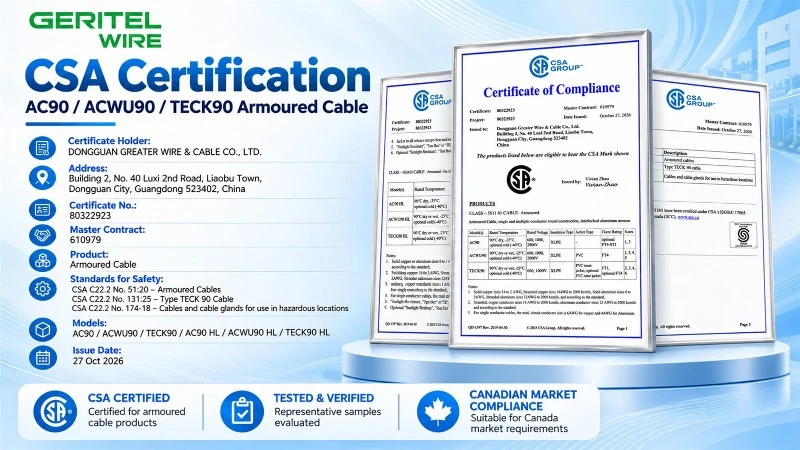
However, correct installation involves more than burial depth. Cable certification, direct-burial approval, bedding materials, mechanical protection, ampacity calculations, and local electrical requirements must all be considered.
For contractors, distributors, and electrical procurement teams, verifying these details before installation can help reduce compliance risks, avoid unnecessary excavation costs, and improve the reliability of underground power distribution systems.
Need Reliable ACWU90 Cable for Your Underground Electrical Projects?
Choosing the right ACWU90 cable is essential for safe, reliable, and cost-effective underground power distribution. GERITEL WIRE, backed by Dongguan Greater Wire & Cable Co., Ltd., provides cable manufacturing and supply solutions for international B2B customers. Whether you are an electrical distributor, engineering contractor, equipment manufacturer, or project purchaser, our team can help you discuss conductor sizes, cable construction, insulation materials, voltage ratings, and project-specific requirements. Contact GERITEL WIRE to discuss your ACWU90 cable specifications, request technical information, or obtain a quotation for your next electrical project.
Dongguan Greater Wire & Cable Co., Ltd.
Tel/WhatsApp/Wechat: +86 136 6257 9592
Tel/WhatsApp/Wechat: +86 135 1078 4550
Email: manager01@greaterwire.com
Website: www.greaterwire.com