

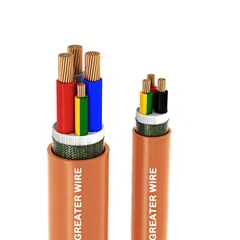

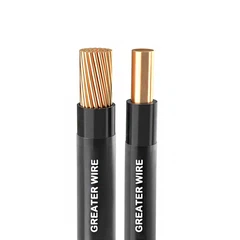
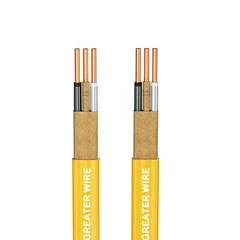
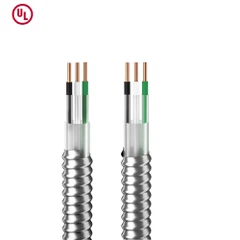
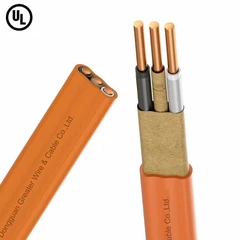
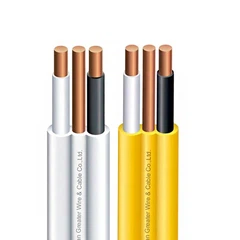

AC90 cable connectors can fail electrical inspections for several reasons, including incorrect connector selection, improper installation, poor cable preparation, loose fittings, inadequate bonding continuity, and missing or unsuitable protective components. Even when the AC90 cable itself is correctly certified and properly sized, an incompatible or incorrectly installed connector can make the entire wiring installation unacceptable.
For electrical contractors, inspectors, distributors, and project procurement teams, understanding these common failure points is essential. AC90 connectors are not simply mechanical fittings that hold an armoured cable in place. They must be suitable for the cable construction, provide the required mechanical connection and electrical bonding path, and comply with the applicable Canadian electrical installation requirements.
This article explains why AC90 cable connectors fail inspection, what inspectors commonly look for, and how to prevent connector-related problems before the installation is submitted for approval.

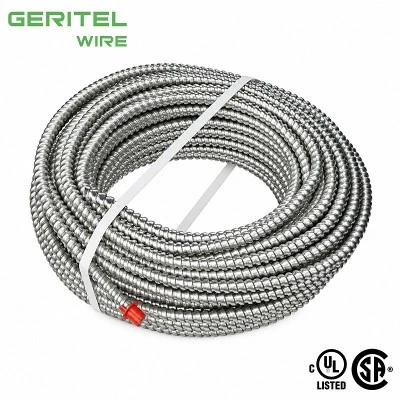
1. The Most Common Reasons AC90 Connectors Fail Inspection
PPT - Wiring Systems PowerPoint Presentation, free download - ID:4905194
slideserve.com
1.1 Missing or Incorrect Anti-Short Bushing
Common inspection issue
One of the most recognizable problems is a missing, incorrectly installed, or unsuitable anti-short bushing.
AC90 has interlocked metal armour. When the cable is cut, the exposed armour edge can be sharp. If insulated conductors come into contact with that edge, their insulation may be damaged, potentially creating a short-circuit or electrical fault risk.
An anti-short bushing is an insulating protective component fitted at the cut end of the armour. It separates the insulated conductors from the sharp metal edge.
Under Rule 12-610 of the 2024 Canadian Electrical Code (CEC), conductors emerging from armoured cable must be protected from abrasion by an insulating bushing or equivalent protection. The rule also requires the connector or clamp to be designed so that the insulating bushing or its equivalent remains visible for inspection when the cable is fastened to equipment.
StudyLib+1
Common problems include:
No anti-short bushing installed.
A bushing that does not fit the cable properly.
A bushing that has been displaced during termination.
The bushing is not visible through the connector as required.
A damaged or deformed bushing that cannot provide proper insulation protection.
How to prevent it: Install the correct insulating bushing or an approved equivalent for the cable and connector arrangement. Before inspection, confirm that the protection is correctly positioned and visible.
1.2 Using the Wrong Connector for the AC90 Cable
Not every armoured cable connector is suitable for every AC90 cable.
Connectors are designed for specific cable types, outside diameters, armour constructions, and installation conditions. A connector that physically fits the cable may still be unsuitable for the intended application.
For example, an undersized connector may not accept the cable properly, while an oversized connector may fail to grip the armour securely.
Common selection mistakes include:
Choosing a connector for the wrong cable diameter.
Using a fitting not identified for the relevant armoured cable construction.
Selecting a connector with an unsuitable clamping range.
Using an ordinary conduit fitting that is not approved for the cable application.
Choosing a connector that does not match the enclosure entry or installation environment.
CSA C22.2 No. 18.3 covers conduit, tubing, and cable fittings, including fittings and box clamps for armoured cable. However, compliance with this standard does not mean that every fitting covered by it is suitable for every AC90 cable. The connector's own certification, markings, and manufacturer instructions must match the application.
Intertek Inform
How to prevent it: Check the cable's trade designation, outside diameter, connector range, and approved application before ordering or installing the fitting.
1.3 Improper Connector Tightening
A connector must grip the cable securely without damaging its armour.
If the clamping screws or other fastening components are too loose, the cable may move within the connector. This can place strain on the conductors and bonding arrangement or cause the termination to become mechanically insecure.
If the connector is overtightened, it may deform the armour or damage the cable's construction.
Potential inspection concerns include:
Cable movement at the connector.
Uneven clamping pressure.
Deformed interlocked armour.
Damaged connector threads or screws.
Incorrect assembly of the connector components.
How to prevent it: Follow the connector manufacturer's installation instructions, including the specified tightening method and torque where one is provided. Do not use an assumed universal torque value for all AC90 connectors.
1.4 Poor Cable Cutting and Preparation
A connector cannot compensate for a badly prepared cable end.
AC90 armour must be cut and prepared so that the cable can enter the fitting correctly without damaging the insulated conductors or disturbing the cable's internal arrangement.
Poor preparation may result in:
Jagged or uneven armour edges.
Excessive armour distortion.
Damaged conductor insulation.
Incorrect insertion depth.
A loose or uneven connection between the fitting and cable.
AC90 manufacturer information also highlights the importance of handling and pulling the cable in the intended direction to avoid snagging and damage to the interlocked armour.
images.homedepot.ca+1
How to prevent it: Use suitable cable-cutting tools and follow the cable manufacturer's preparation instructions. Inspect the cut end before fitting the connector, and do not use a damaged section as a termination point.
1.5 Damaged Conductor Insulation Near the Connector
The area where the conductors emerge from the armour is particularly important.
If the armour is cut carelessly, the conductor insulation may be nicked, scraped, or compressed. The damage may be difficult to see after the connector has been assembled.
Even a small cut in the insulation can create a potential electrical safety problem.
Inspectors may identify:
Visible cuts or abrasions on conductor insulation.
Exposed conductor material where insulation should remain intact.
Conductors pinched between connector components.
Insulation damage caused by sharp armour edges.
Conductors bent or forced into an enclosure without adequate space.
How to prevent it: Prepare the cable carefully, install the required insulating protection, and inspect the conductors before completing the termination. If insulation has been damaged, do not simply cover the defect with tape and assume the installation is acceptable. Have the damaged section assessed and repaired or replaced using an approved method.
1.6 Incorrect Bonding Conductor Termination
A typical multiconductor AC90 cable includes a separate bonding conductor. This conductor is an essential part of the cable's electrical safety arrangement.
A common misunderstanding is that the metal armour alone provides the complete bonding path. It should not be treated as a substitute for the cable's dedicated bonding conductor.
The bonding conductor must be connected and terminated in accordance with the applicable CEC requirements and equipment instructions. A loose, omitted, or improperly secured bonding conductor can cause an inspection problem even when the connector appears mechanically secure.
Common issues include:
The bonding conductor is not connected to the designated bonding terminal.
The bonding conductor is cut too short for proper termination.
The conductor is trapped or damaged during connector installation.
The terminal is unsuitable for the conductor material or size.
The bonding connection is mechanically loose.
How to prevent it: Identify the bonding conductor during cable preparation and connect it using an approved terminal or bonding arrangement. Verify that the connection is secure and compatible with the conductor material.
The exact bonding arrangement depends on the cable construction and equipment. Single-conductor AC90 products may use a different bonding configuration from typical multiconductor products, so the product datasheet must be checked.
1.7 Connector Not Suitable for the Installation Environment
A connector that is acceptable in a dry indoor electrical box may not be suitable for an outdoor, wet, corrosive, or hazardous-location installation.
Standard AC90 products are commonly specified for dry locations. For example, Nexans identifies its AC90 product for open and concealed wiring in dry locations only.
AC90
If a connector is installed where moisture or other environmental exposure is present, the fitting may lack the required environmental protection.
Potential problems include:
Using a dry-location fitting in a wet environment.
Missing or incompatible sealing components.
Corrosion of connector materials.
Using a fitting without the required hazardous-location approval.
Failing to maintain the enclosure's environmental rating.
How to prevent it: Check the location classification and select a connector approved for the actual environment. Where a project requires wet-location or hazardous-location protection, verify the complete cable, connector, enclosure, and installation arrangement rather than checking the cable alone.
1.8 Cable Not Properly Supported Near the Connector
A connector should not be expected to carry the weight or pulling force of an unsupported cable run unless it is specifically designed and approved for that purpose.
Excessive strain near a termination can loosen the fitting, distort the armour, or place stress on the conductor connections.
The 2024 CEC Rule 12-618 addresses the support of armoured cable and specifies support intervals and distances from termination points. The exact requirements depend on connector trade size and the installation arrangement.
philtech.ca
How to prevent it: Provide cable supports at the required intervals and close enough to the termination to prevent undue strain. Follow the applicable code and manufacturer's instructions rather than relying on the connector to support an entire cable run.
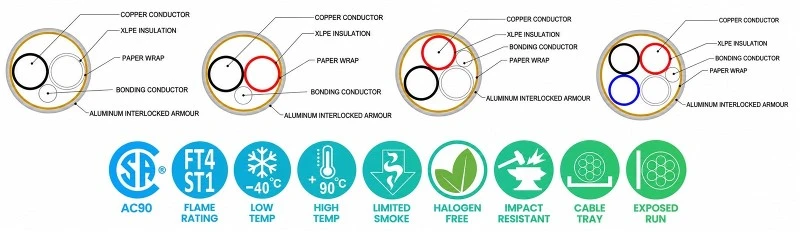
2. What Do Inspectors Commonly Check at an AC90 Connector?
An electrical inspector generally evaluates more than whether the connector looks securely attached. The inspection may include the cable entry, insulating protection, mechanical connection, bonding, and suitability of the components.
The following table summarizes common inspection points.
|
Inspection item |
What should be checked |
Potential reason for rejection |
|---|---|---|
|
Connector selection |
Correct fitting for AC90 cable and cable diameter |
Wrong or unsuitable connector |
|
Anti-short protection |
Bushing or approved equivalent correctly installed |
Missing, damaged, or unsuitable protection |
|
Visibility of protection |
Required insulating protection visible at the termination |
Bushing hidden or displaced |
|
Armour condition |
Armour properly cut and not excessively deformed |
Damaged or distorted armour |
|
Connector grip |
Cable securely held by the fitting |
Loose or inadequate clamping |
|
Conductor insulation |
No visible cuts or abrasion |
Damaged insulation |
|
Bonding conductor |
Correctly connected and secured |
Missing or loose bonding connection |
|
Cable support |
Support provided as required |
Excessive strain at the termination |
|
Environmental suitability |
Connector suitable for the location |
Incorrect dry/wet or hazardous-location fitting |
|
Product certification |
Markings and approval appropriate for the application |
Unverified or unsuitable component |
The inspector's actual checklist may vary with the province or territory, adopted CEC edition, installation type, and authority having jurisdiction (AHJ).
3. What Is the Difference Between an Anti-Short Bushing and an Insulated Connector?
These components are sometimes confused, but they do not necessarily perform the same function.
1" Anti-Short Bushing - Non-Metallic | Southwire
Topaz 157MI | 157MI 2-1/2-inch Insulated Throat Squeeze Type Straight Bx-Flex Connector | 157MI 751338111615
Arlington | 38AST Product Information
ABB 391 Anti-Short Bushing Non-Metallic
Arlington Snap2IT 5010AST Straight Cable Connector With Insulated Throat, 1/2 in Trade, 1/2 in Knockout, 0.56 to 0.85 in Cable Openings, Die Cast Zinc | Mars Electric
Snap2It® MC Flex Cable Connectors w/ Ground – Primus Cable
Canada Market Hot Sale Cables AC90 Acwu90 Teck90 Nmwu 90 12/2 14/2 - AC90 12/2 and AC90 Building Wire
Fitting: 25/pk, 1/2in ID, straight, insulated, for flexible metal conduit (FMC), AC cable (BX), MC cable (PN# 84205B) | AutomationDirect
|
Component |
Main function |
|---|---|
|
Anti-short bushing |
Protects conductor insulation from the sharp cut edge of the armour |
|
Insulated-throat connector |
Provides an insulated surface at the connector opening to reduce abrasion risk |
|
Armoured cable connector |
Mechanically secures the cable to an electrical box or enclosure |
|
Locknut |
Secures a suitable connector to the enclosure opening |
|
Bonding terminal or arrangement |
Provides the required electrical bonding connection where specified |
An insulated-throat connector does not automatically eliminate every bushing requirement. The applicable CEC provision allows an insulating bushing or equivalent protection, and the specific connector and cable arrangement must satisfy that requirement.
For some jacketed armoured cables, the CEC permits the inner jacket to serve as the protective barrier when it protrudes at least 5 mm beyond the armour. That provision should not be assumed to apply to ordinary AC90, which typically does not have an inner jacket.
StudyLib
Practical takeaway: Do not assume that a connector advertised as having an insulated throat is automatically acceptable for every AC90 termination. Confirm the product instructions and the applicable code requirements.
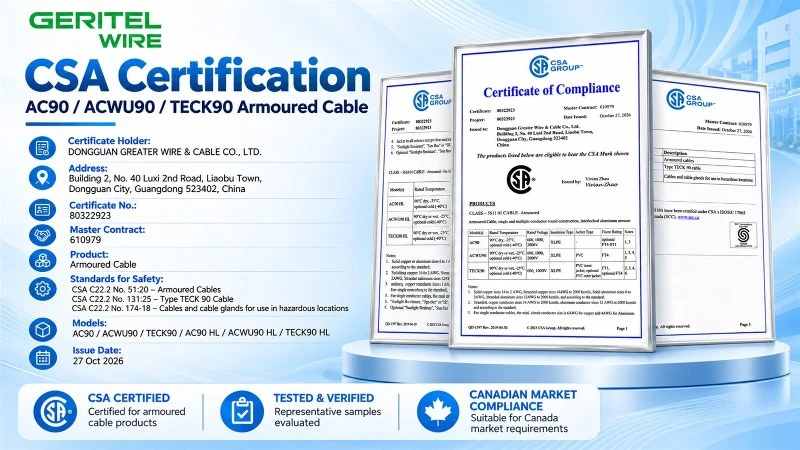
4. Which Standards and Code Requirements Are Relevant?
For Canadian AC90 installations, it is important to distinguish between the cable product standard, the connector product standard, and the electrical installation code.
|
Standard or code |
Main purpose |
Relevance to AC90 connectors |
|---|---|---|
|
CSA C22.2 No. 51 |
Armoured cable product requirements |
Covers AC90 cable construction |
|
CSA C22.2 No. 18.3 |
Conduit, tubing, and cable fittings |
Covers relevant fitting categories for armoured cable |
|
CSA C22.1 |
Canadian Electrical Code, Part I |
Governs installation requirements |
|
CSA C22.2 No. 65 |
Wire connectors |
Relevant to certain conductor splicing and termination connectors, not a substitute for cable-fitting requirements |
CSA C22.2 No. 51: AC90 cable standard
CSA C22.2 No. 51 covers armoured cable constructions, including AC90. It addresses the cable itself, not the approval of every connector used to terminate it.
ANSI 商店
CSA C22.2 No. 18.3: Cable fitting standard
CSA C22.2 No. 18.3 covers fittings used with cable and conduit, including fittings for armoured cable. The standard is harmonized with UL 514B and the corresponding Mexican standard within its stated scope.
Intertek Inform
A connector certified to the relevant Canadian requirements still needs to be suitable for the particular cable and installation.
CSA C22.1: Canadian Electrical Code
The CEC provides the installation requirements. For AC90 terminations, Rule 12-610 is particularly important because it addresses conductor protection where conductors emerge from armour.
Rule 12-618 also addresses cable support and the prevention of undue strain on armoured cable.
StudyLib+1
What about UL and IEC standards?
UL 514B is harmonized with CSA C22.2 No. 18.3 for relevant conduit and cable fittings, but buyers and contractors should still verify the actual certification marks and Canadian acceptance of the specific product.
IEC and AS/NZS requirements belong to different standards and installation frameworks. A connector or cable accepted under a Canadian certification does not automatically meet the requirements of an IEC-based or Australian/New Zealand project.
For overseas procurement, always identify the destination market and required certification before specifying connectors.
5. How Can Contractors Prevent AC90 Connector Inspection Failures?
The best approach is to check connector compatibility and cable preparation before completing the installation, rather than waiting for an inspector to identify problems.
A practical process includes the following steps.
Step 1: Confirm the cable specification
Before selecting a connector, identify:
AC90 cable designation.
Conductor material and size.
Number of insulated conductors.
Cable outside diameter.
Armour material and construction.
Applicable product certification.
These details help determine which connector is suitable.
Step 2: Select a compatible connector
Check the connector manufacturer's documentation for:
Approved cable types.
Cable diameter range.
Permitted conductor and armour configurations.
Environmental rating.
Installation and tightening instructions.
Applicable certification markings.
Do not select a fitting based on nominal trade size alone.
Step 3: Prepare the cable correctly
Use suitable tools to cut the armour and expose the conductors without damaging their insulation.
Remove damaged cable sections rather than attempting to conceal defects during termination.
Step 4: Install the required insulating protection
Fit the appropriate anti-short bushing or approved equivalent. Make sure it is correctly positioned and remains visible where required by the CEC.
Step 5: Secure the connector
Assemble the fitting according to the manufacturer's instructions. Confirm that the cable is held securely and that the armour has not been excessively deformed.
Step 6: Complete the bonding connection
Identify and terminate the bonding conductor correctly. Check that the terminal is suitable for the conductor material and size.
Step 7: Check cable support
Confirm that the cable is supported in accordance with the applicable installation requirements and that the connector is not subjected to undue mechanical strain.
Step 8: Perform a final visual inspection
Before requesting inspection, check the completed termination for missing components, damaged insulation, loose fittings, incorrect bonding, and other visible installation defects.

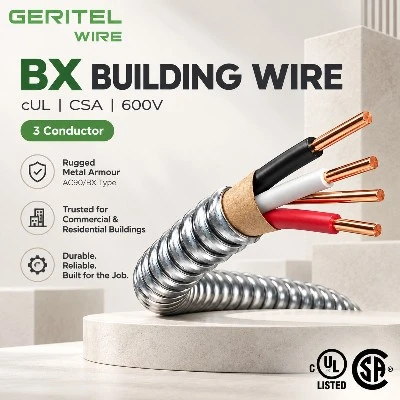
6. AC90 Connector Pre-Inspection Checklist
Contractors and electrical installation teams can use this checklist before submitting an AC90 installation for inspection.
AC90 connector inspection checklist
0 of 10 checked
Reset
The connector is suitable for the specific AC90 cable and its outside diameter.
The connector has the required certification and is approved for the installation environment.
The cable armour is properly cut and has no unacceptable deformation.
An anti-short bushing or approved equivalent is correctly installed.
The insulating protection remains visible where required.
The conductor insulation is free from visible cuts and abrasion.
The bonding conductor is correctly terminated and secured.
The connector is properly assembled and tightened according to its instructions.
The cable is adequately supported near the termination.
The enclosure entry and environmental protection requirements are satisfied.
This is a practical pre-inspection aid, not a replacement for the applicable electrical code or the inspector's requirements.
7. What Should Buyers Consider When Purchasing AC90 Connectors?
Inspection failures are not always caused by the electrician. Procurement decisions can also contribute to problems when the selected fittings are not compatible with the cable or project requirements.
Electrical distributors, contractors, and purchasing teams should consider the following points.
Connector compatibility: Confirm that the fitting is specifically suitable for the AC90 cable construction and outside diameter.
Certification: Request evidence of the connector's applicable Canadian certification. Do not rely solely on a supplier's statement that a fitting is suitable for armoured cable.
Insulating protection: Confirm whether the connector includes an insulated throat or requires a separate anti-short bushing.
Material compatibility: Consider connector material, armour material, and the installation environment, particularly where corrosion may be a concern.
Installation instructions: Obtain the manufacturer's instructions for cable preparation, clamping, and tightening.
Project requirements: Check whether the project specification requires particular connector brands, certification marks, or approved fitting types.
For larger projects, it is useful to approve the cable and connector combination before bulk purchasing. This reduces the risk of receiving fittings that cannot be used with the selected AC90 product.
8. Final Recommendation: Why Do AC90 Cable Connectors Fail Inspection?
AC90 cable connectors most often fail inspection because the fitting is unsuitable, the cable end is poorly prepared, insulating protection is missing or incorrectly installed, or the termination does not meet bonding and mechanical installation requirements.
The anti-short bushing deserves particular attention because it protects conductor insulation from the sharp edge of the interlocked armour. However, connector compatibility, correct tightening, bonding conductor termination, and cable support are equally important.
For Canadian installations, contractors should pay particular attention to CEC Rules 12-610 and 12-618, while confirming that the connector is certified and suitable for the specific cable and installation environment.
The most reliable way to avoid inspection problems is to treat the AC90 cable, connector, insulating protection, bonding arrangement, and enclosure entry as one coordinated installation-not as separate components selected independently.
GERITEL WIRE: AC90 Armoured Cable for Reliable Electrical Installations
Reliable AC90 installations depend on more than cable quality. Correct cable preparation, compatible connectors, proper insulating protection, and secure bonding connections all contribute to safe and inspection-ready electrical systems. GERITEL WIRE supplies AC90 armoured cables for commercial and industrial building applications, supporting electrical distributors, contractors, OEM manufacturers, and project procurement teams. We provide product specifications and technical information to help customers evaluate conductor materials, cable construction, and applicable CSA requirements when sourcing armoured cables. If you are planning an AC90 cable project or reviewing your supply requirements, contact GERITEL WIRE to discuss suitable products and request further information.
Dongguan Greater Wire & Cable Co., Ltd.
Tel/WhatsApp/Wechat: +86 136 6257 9592
Tel/WhatsApp/Wechat: +86 135 1078 4550
Email: manager01@greaterwire.com
Website: www.greaterwire.com