



1.Understanding XHHW Wire: Composition and Applications
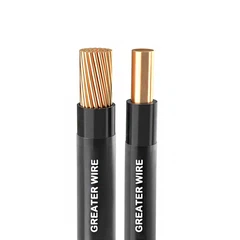
XHHW (Cross-Linked Polyethylene High Heat-Resistant Water-Resistant) wire is a versatile, durable cable designed for both wet and dry environments. Its insulation comprises cross-linked polyethylene (XLPE), which offers superior thermal stability (rated up to 90°C in dry conditions and 75°C in wet conditions) and resistance to moisture, chemicals, and abrasion. These properties make it a popular choice for power distribution in commercial, industrial, and residential buildings.
Common applications include:
Service entrance conductors
Panel feeders
Branch circuits
Industrial machinery
But does this translate to telecommunications installations?
2.Telecommunications Infrastructure: Unique Requirements
Telecommunications systems prioritize signal integrity, electromagnetic interference (EMI) resistance, and compliance with low-voltage standards. Unlike power cables, telecom wires often carry data or voice signals at voltages below 50V, requiring shielding and precise impedance control.
Key considerations for telecom wiring:
Shielding: To minimize EMI from nearby power lines.
Voltage Rating: Typically 300V or less for low-voltage applications.
Flexibility: Ease of installation in tight spaces.
Standards Compliance: NEC Article 800 (Communications Circuits) and ANSI/TIA-568 for structured cabling.
Given these requirements, XHHW's primary role in telecom installations is indirect-providing power to telecom equipment rather than transmitting signals.

3.XHHW Wire in Telecom: Use Cases and Limitations
While XHHW is not designed for data transmission, it plays a critical role in supporting telecom infrastructure:
3.1 Powering Telecom Equipment
Telecom hubs, data centers, and cell towers require reliable power distribution. XHHW cables like 1AWG 2AWG XHHW and 3/0 XHHW Copper 600V are ideal for:
Backup generator connections
Uninterruptible Power Supply (UPS) systems
High-current feeders to telecom cabinets
For example, 4/0 XHHW Wire (a 0000 AWG copper conductor) can handle up to 260A at 75°C, making it suitable for heavy-duty power circuits in large telecom facilities.
3.2 Outdoor and Underground Conduits
Telecom installations often involve outdoor or buried conduits. XHHW's water-resistant XLPE insulation ensures longevity in wet environments. Aluminum options like 500MCM XHHW Aluminum offer a cost-effective solution for long-distance power runs due to aluminum's lightweight properties.
3.3 Hybrid Power-Data Installations
In facilities combining power and low-voltage telecom lines, XHHW may coexist with data cables if NEC separation guidelines (e.g., 12-inch spacing) are followed to prevent interference.

4.Key XHHW Products for Telecom Support
Let's examine how specific XHHW products align with telecom needs:
4.1 1AWG 2AWG XHHW
Applications: Secondary power distribution to telecom racks, small cell sites.
Advantages: Compact size, 600V rating, and flexibility for conduit bends.
Limitations: Not shielded for data transmission.
4.2 3/0 XHHW Copper 600V
Applications: High-current feeders, generator hookups.
Advantages: Copper's high conductivity (100% IACS) ensures minimal voltage drop over long distances.
NEC Compliance: Rated for 225A at 75°C (NEC Table 310.16).
4.3 4/0 XHHW Wire
Applications: Main power lines for telecom hubs.
Capacity: 260A at 75°C, suitable for large-scale installations.
4.4 500MCM XHHW Aluminum
Applications: Cost-effective power distribution over 200+ feet.
Benefits: Aluminum's lower cost and weight vs. copper.
Considerations: Requires larger conduits due to aluminum's lower conductivity.

5.Compliance and Safety Considerations
While XHHW wire meets NEC standards for power applications (Article 310), telecom installations demand adherence to additional codes:
Separation from Data Cables: NEC 800.133(A) mandates physical separation or shielding between power and communication lines.
Voltage Limitations: XHHW's 600V rating exceeds typical telecom voltages but remains safe for auxiliary power.
Environmental Ratings: XHHW-2 (UL-rated for wet locations) is preferred for outdoor telecom enclosures.

6.Copper vs. Aluminum in Telecom Power Systems
Choosing between copper and aluminum XHHW depends on project scope:
| Factor | Copper (e.g., 3/0 XHHW) | Aluminum (e.g., 500MCM XHHW) |
|---|---|---|
| Conductivity | Higher (better for short runs) | Lower (requires larger gauge) |
| Cost | More expensive | Budget-friendly |
| Weight | Heavier | Lightweight |
| Termination | Easier connections | Requires antioxidant compounds |
For telecom backup systems prioritizing reliability, copper is often preferred. For sprawling installations, aluminum's cost savings may justify its use.

7.Installation Best Practices
To maximize XHHW's effectiveness in telecom settings:
Use metallic conduits for EMI shielding.
Label power and data cables clearly to avoid confusion.
Follow torque specifications for lugs to prevent loose connections.
Test insulation resistance post-installation (per ANSI/NETA ATS-2017).

In the US cable market, Dongguan Greater Wire & Cable Co., Ltd.'s price and certification advantages are highlights. Our products have passed UL83, UL44, UL719, UL493 UL1277 and other certifications, and the quality is reliable. The large-scale production and high production efficiency can effectively reduce costs. The price is 25% lower than that of local US brands, providing you with high-quality, low-priced cable products. Whether it is a commercial building or a residential project, we can provide you with high-quality cable solutions.