

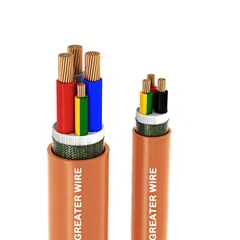

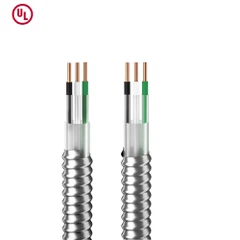
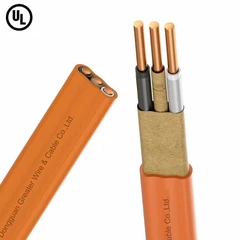
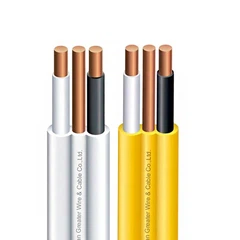
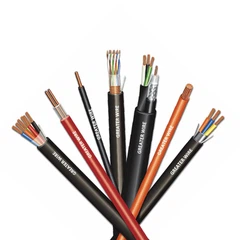
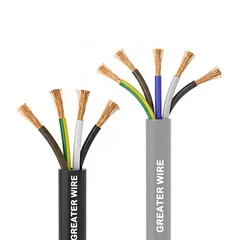
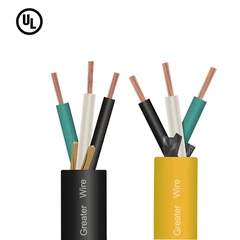
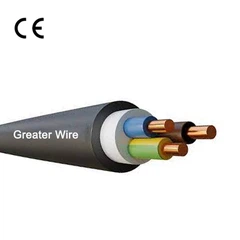
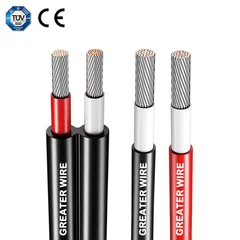

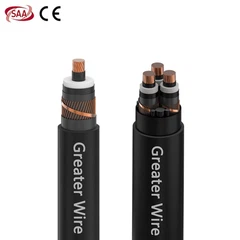
Selecting the correct cable gland for jacketed ACWU90 cable is an important part of a safe and reliable electrical installation. The gland must do more than simply allow the cable to enter an electrical enclosure. It may also need to secure the cable, accommodate the aluminum interlocked armour, maintain electrical bonding continuity, and provide an appropriate environmental seal.
One common mistake is selecting a cable gland based only on the nominal cable size or overall outside diameter. ACWU90 is an armoured cable with an outer jacket, so the fitting must be specifically suitable for its cable construction.
For electrical contractors, engineers, distributors, and procurement professionals, understanding these requirements helps prevent loose terminations, damaged cable jackets, inadequate bonding, and moisture ingress.
This guide explains how to select cable glands for jacketed ACWU90, what dimensions to check, which certifications matter, and how to avoid common installation mistakes.
1. Why Does Jacketed ACWU90 Need a Suitable Cable Gland?
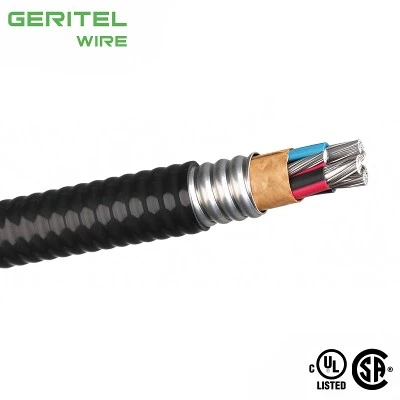
ACWU90 is a Canadian armoured cable type commonly used for commercial and industrial power distribution.
A typical ACWU90 construction includes:
| Cable Component | Typical Material | Function |
|---|---|---|
| Conductors | Aluminum or copper, depending on the product | Carry electrical current |
| Conductor insulation | XLPE (cross-linked polyethylene) | Provides electrical insulation |
| Bonding conductor | Depends on the certified construction | Provides an electrical bonding path |
| Armour | Interlocked aluminum armour | Provides mechanical protection |
| Outer jacket | Commonly PVC | Protects the cable assembly against environmental exposure |
The outer jacket is an important distinction between ACWU90 and an unjacketed armoured cable such as a typical AC90 construction.
A cable gland selected for ACWU90 must therefore be compatible with both the metallic armour and the outer jacket.
1.1 What Does a Cable Gland Do?
A cable gland is a fitting installed where a cable enters an electrical enclosure, panel, junction box, or equipment housing.
Depending on its design and certification, it can perform several functions:
Cable retention: Helps prevent the cable from being pulled out of the enclosure.
Armour termination: Provides a suitable mechanical connection to the cable's metallic armour.
Bonding continuity: Maintains the required electrical continuity through the metallic armour termination.
Environmental sealing: Helps prevent water, dust, and other contaminants from entering the enclosure through the cable entry.
Mechanical support: Helps secure the cable at the enclosure entry point.
Not every cable gland performs all these functions. A simple compression gland may provide cable retention and sealing but may not be suitable for terminating interlocked armour or maintaining its bonding continuity.
For jacketed ACWU90, choose a fitting whose manufacturer explicitly identifies it as suitable for the applicable armoured cable construction.
1.2 Why Is the Outer Jacket Important?
The PVC outer jacket provides additional environmental protection around the aluminum armour.
However, the jacket also changes the dimensions that the gland must accommodate.
A gland designed for an unjacketed armoured cable may not have the correct sealing arrangement or dimensional range for jacketed ACWU90.
A suitable jacketed-cable fitting may need to accommodate:
The cable's overall outside diameter.
The outer jacket's thickness and material.
The diameter over the metallic armour.
The armour's construction and mechanical characteristics.
Some specialized fittings use separate sealing and armour-gripping mechanisms. This allows the fitting to seal around the jacket while providing a suitable connection to the armour.
For example, ABB's Iberville AMC series identifies ACWU90 and ACGWU90 among its compatible cable types. Its technical documentation also provides separate dimensional ranges for measurements over the armour and over the jacket. This illustrates why jacketed ACWU90 should not be treated as an ordinary unarmoured cable when selecting a gland. Source: ABB AMC Technical Data Sheet
2. Choose a Cable Gland Specifically Compatible With ACWU90
The first selection requirement is cable-type compatibility.
Do not assume that a gland suitable for one armoured cable type will automatically work with another.
Different armoured cables may have different:
Armour materials.
Armour profiles and dimensions.
Inner bedding constructions.
Outer jacket materials.
Overall cable diameters.
Bonding and earthing arrangements.
For example, ACWU90 typically uses interlocked aluminum armour, while other armoured cable types may use steel armour or different metallic sheath constructions.
A fitting designed for steel wire armour (SWA) should not automatically be selected for ACWU90 simply because both products are described as armoured cable glands.
2.1 Look for Explicit ACWU90 Compatibility
When reviewing a gland manufacturer's catalogue, check whether the product is identified for:
ACWU90.
ACGWU90, where applicable.
Jacketed interlocked armour.
Aluminum-armoured cable.
The specific cable construction and size required.
A useful example is ABB's Iberville AMC series. Its technical datasheet specifically lists ACWU90 and ACGWU90 as compatible cable types and describes the fitting as suitable for jacketed and non-jacketed metal-clad and Teck 90 cables. Source: ABB AMC Series
This is an example of a product-specific compatibility statement, not a recommendation that every ACWU90 installation must use this particular fitting.
2.2 Do Not Select a Gland by Cable Name Alone
Even when a gland manufacturer lists ACWU90 as a compatible cable type, the selected part number must still match the actual cable dimensions.
For example, two ACWU90 cables with the same conductor size may have different overall diameters because of differences in:
Number of conductors.
Conductor stranding.
Insulation thickness.
Armour dimensions.
Outer jacket thickness.
Manufacturer-specific construction.
Therefore, a cable designation such as 3C 4/0 AWG ACWU90 is not enough information to determine the correct gland size.
Always check the cable manufacturer's datasheet and the gland manufacturer's selection table.

3. How Do You Determine the Correct Cable Gland Size?
Correct sizing is one of the most important parts of cable gland selection.
A gland that is too small may not accept the cable properly. A gland that is too large may fail to provide the intended sealing or retention performance.
For jacketed ACWU90, the selection process should consider more than one diameter.
3.1 Measure the Overall Cable Outside Diameter
The overall outside diameter, often abbreviated as OD, is the measurement across the finished cable, including its outer jacket.
This dimension is important because the gland's sealing arrangement must accommodate the actual jacketed cable.
For example:
A cable with an overall diameter of 25 mm requires a gland with a compatible cable-size range.
A gland whose maximum permitted cable diameter is 24 mm would not be suitable.
A gland with a much larger sealing range may also be unsuitable if the cable falls below its specified minimum.
Do not estimate the diameter from conductor size or use a generic online cable-size chart as a substitute for the manufacturer's data.
3.2 Check the Diameter Over the Armour
For an armoured cable gland, the armour dimensions are also important.
The fitting must be designed to engage with the cable's metallic armour in the intended manner.
Some gland designs use a clamping ring, spring mechanism, or other internal components to establish mechanical contact with the armour.
If the armour diameter is outside the manufacturer's permitted range, the gland may not provide the intended mechanical retention or bonding continuity.
This is particularly important for jacketed ACWU90 because the outer jacket and the armour are separate layers with different dimensions.
3.3 Check Both the Armour and Jacket Ranges
Some cable gland manufacturers publish separate ranges for:
Diameter over armour.
Diameter over jacket.
These dimensions should not be confused.
For example, ABB's AMC technical datasheet provides separate minimum and maximum values for both measurements. Its AMC-0501 model lists a range of 11.18–16.76 mm over armour and 12.45–19.81 mm over jacket. These figures apply to that specific fitting model and should not be used as universal ACWU90 sizing values. Source: ABB AMC Technical Data Sheet
The correct gland must satisfy the manufacturer's requirements for all relevant cable dimensions.
3.4 Use the Actual Cable Datasheet
Before ordering, obtain the following information from the cable manufacturer:
| Required Information | Why It Matters |
|---|---|
| Overall cable diameter | Determines the required jacket sealing range |
| Diameter over armour | Helps confirm armour-gripping compatibility |
| Armour material | Confirms suitability of the gland design |
| Armour construction | Ensures compatibility with interlocked armour |
| Outer jacket material | Helps confirm sealing-material compatibility |
| Cable configuration | Identifies the exact product construction |
| Operating temperature | Helps determine whether the gland materials are suitable |
If the published cable dimensions are unavailable, request them from the cable supplier rather than guessing.
3.5 Avoid Improvised Size Adjustments
Never attempt to make an incorrectly sized gland fit by:
Wrapping tape around the cable.
Adding unapproved packing materials.
Cutting or modifying the sealing insert.
Removing the outer jacket beyond the gland manufacturer's specified preparation.
Forcing an oversized or undersized fitting into place.
These modifications may compromise cable retention, environmental sealing, and the fitting's certification.
If the cable dimensions fall outside the gland's published range, select another approved fitting or ask the manufacturer for a suitable alternative.
4. Select the Correct Gland Material
Cable gland material affects mechanical performance, corrosion resistance, and compatibility with the electrical enclosure.
Common materials include aluminum, brass, stainless steel, and certain engineered polymers.
For ACWU90, the selected material should be suitable for the installation environment and compatible with the cable's metallic armour and enclosure.
| Gland Material | Typical Characteristics | Selection Considerations |
|---|---|---|
| Aluminum | Lightweight and electrically conductive | Often considered for aluminum-armoured cable applications; check alloy and corrosion compatibility |
| Brass | Strong metallic construction and good general corrosion resistance | Consider plating, environmental exposure, and dissimilar-metal compatibility |
| Stainless steel | High corrosion resistance in many environments | Check grade, cost, and compatibility with adjacent materials |
| Non-metallic materials | Can provide corrosion-resistant sealing and mechanical functions | Must be specifically approved for the cable type and required bonding arrangement |
4.1 Why Is Aluminum Often Considered for ACWU90?
ACWU90 commonly uses interlocked aluminum armour.
An aluminum cable gland may be a practical choice because it can provide a compatible metallic termination while avoiding some potential dissimilar-metal corrosion concerns.
For example, ABB's Iberville AMC series uses copper-free aluminum for the fitting body, along with a chloroprene seal and a copper-plated stainless steel spring. Source: ABB AMC Technical Data Sheet
However, aluminum is not automatically the correct material for every installation.
The selection should consider:
The cable armour material.
The enclosure material.
Moisture and chemical exposure.
Corrosion risk.
Electrical bonding requirements.
The fitting manufacturer's recommendations.
4.2 Consider the Installation Environment
A gland installed indoors in a dry electrical room may have different environmental requirements from one installed outdoors or in an industrial washdown area.
Check whether the selected fitting is suitable for:
Indoor or outdoor installation.
Wet or dry locations.
Temperature extremes.
UV exposure, where relevant.
Chemical exposure.
Corrosive industrial atmospheres.
Do not assume that a metallic cable gland is automatically waterproof or corrosion-resistant under all conditions.

5. Check the Required Environmental Protection Rating
The cable gland must provide an appropriate level of environmental protection for the enclosure and installation location.
This is particularly important for jacketed ACWU90 used in outdoor, industrial, and other moisture-exposed environments.
5.1 Understand IP and NEMA/Type Ratings
Two common systems used to describe enclosure protection are IP ratings and NEMA/Type ratings.
They are different classification systems and should not be treated as directly interchangeable.
| Rating System | What It Describes | What to Check |
|---|---|---|
| IP rating | Protection against access, solid objects, and water ingress | Confirm the required IP rating for the application |
| NEMA/Type rating | Enclosure protection characteristics under the applicable North American standard | Confirm the required Type rating and fitting conditions |
The rating of a cable gland should be verified from the manufacturer's documentation.
Also confirm whether the published rating applies to:
Jacketed or unjacketed cable.
A specific cable diameter range.
A particular enclosure entry arrangement.
A complete installed fitting assembly.
Specific sealing accessories or installation conditions.
For example, ABB identifies its AMC series as Type 4 when used with jacketed cables only. This is a product-specific rating condition, not a universal rating for all ACWU90 glands. Source: ABB AMC Technical Data Sheet
5.2 Do Not Assume the Gland Makes the Entire Enclosure Waterproof
Even when a gland has a suitable environmental rating, the complete enclosure installation must be evaluated.
Potential leakage paths include:
The cable-to-gland sealing interface.
The gland-to-enclosure interface.
Incorrectly tightened locknuts.
Damaged sealing washers.
Unused enclosure openings.
Poorly sealed adapters or reducers.
The enclosure, gland, locknut, sealing washer, and cable must be installed as a compatible assembly.
6. Confirm Armour Bonding and Electrical Continuity
One of the most important functions of an armoured cable termination is maintaining the required electrical bonding arrangement.
ACWU90 contains metallic aluminum armour. The gland must be suitable for the intended armour termination and must not compromise the cable's required bonding path.
6.1 Why Does Armour Bonding Matter?
Electrical bonding connects conductive parts together to help maintain electrical continuity and provide a path for fault current under the applicable installation design.
If the metallic armour is not properly terminated, the installation may have an inadequate bonding path.
Potential consequences include:
Loss of required electrical continuity.
Increased electrical safety risk.
Failure to meet applicable installation requirements.
Inspection or commissioning problems.
A properly selected armoured-cable fitting can help establish the required electrical connection between the cable armour and the enclosure.
6.2 Do Not Assume Every Metal Gland Provides the Required Bonding
A metallic fitting is not automatically an approved armour-bonding device.
The fitting must be designed and evaluated for the intended cable construction and installation.
For example, ABB's AMC series uses a spring-based arrangement that its manufacturer identifies as providing grounding continuity of the cable armour. Source: ABB AMC Technical Data Sheet
This is a useful example of why the gland's internal construction and certification matter.
Do not rely on accidental metal-to-metal contact, an ordinary locknut, or an improvised connection as a substitute for an approved bonding arrangement.
The complete installation must follow the applicable electrical code and fitting manufacturer's instructions.
6.3 Consider the Cable's Bonding Conductor
ACWU90 constructions may include a separate bonding conductor, and its material and arrangement can vary.
For example, a typical Nexans aluminum ACWU90 product uses a bare aluminum bonding wire in multi-conductor constructions and aluminum concentric bonding wires in single-conductor constructions. Source: Nexans ACWU90 Product Data
The gland does not automatically replace the cable's specified bonding conductor or other bonding requirements.
The designer and installer must follow the approved cable construction and applicable bonding method.
7. Check the Enclosure Entry Thread and Connection Type
A cable gland must fit both the cable and the enclosure opening.
Even if the gland is compatible with the ACWU90 cable dimensions, an incorrect entry thread can prevent proper installation.
Common thread types include:
NPT (National Pipe Thread).
Metric threads, such as M20 or M25.
Other thread types specified by the enclosure or equipment manufacturer.
Before ordering, verify:
The enclosure entry thread type.
The thread size.
The required thread engagement.
The available mounting space.
Whether a locknut, sealing washer, or approved adapter is required.
7.1 Avoid Mixing Incompatible Thread Types
NPT and metric threads are not interchangeable.
Forcing one thread type into another can damage the fitting or enclosure and may compromise mechanical security and environmental sealing.
If an adapter is necessary, it must be suitable for the application and compatible with the required enclosure protection rating.

8. Consider Hazardous-Area Requirements
Some ACWU90 products are available with additional hazardous-location certification. However, a standard ACWU90 designation does not automatically establish that the complete cable installation is approved for a hazardous location.
The cable gland must also have the appropriate certification and suitability for the classified area.
Important considerations include:
Hazardous-area classification.
Class, Division, or Zone designation.
Gas or dust group, where applicable.
Temperature classification.
Equipment protection level, where relevant.
Required sealing method.
Cable construction and entry arrangement.
Certification of the complete fitting for the intended use.
8.1 Do Not Confuse General-Purpose and Hazardous-Area Glands
A cable gland certified for ordinary wet or dry locations is not automatically suitable for a hazardous location.
For Canadian installations, check the applicable Canadian Electrical Code requirements and the relevant certification of the cable gland.
CSA C22.2 No. 174 addresses cables and cable glands for use in hazardous locations. The specific fitting must have the required approval for the classified application.
Similarly, a gland's suitability for a hazardous location under one certification system should not automatically be assumed to satisfy another country's requirements.
For example, a product described as suitable for a particular NEC Class/Division application must still be checked against the Canadian project requirements and the fitting's actual certification markings.
Where the installation is in a hazardous area, consult the project electrical engineer, equipment manufacturer, and local inspection authority before specifying the gland.
9. Which Standards and Certifications Should You Check?
For Canadian ACWU90 installations, it is important to distinguish between the cable product standard and the fitting standard.
They have different purposes.
| Standard | General Scope | Relevance |
|---|---|---|
| CSA C22.2 No. 51 | Armoured cables | Relevant to the ACWU90 cable product |
| CSA C22.2 No. 18.3 | Conduit, tubing, and cable fittings | Relevant to applicable cable fittings |
| UL 514B | Conduit, tubing, and cable fittings | Relevant to fittings certified under the UL system |
| CSA C22.2 No. 174 | Cables and cable glands for hazardous locations | Relevant to applicable hazardous-location products |
CSA C22.2 No. 51 relates to the armoured cable itself. It does not mean that any cable gland used with that cable is automatically approved.
Likewise, a fitting conforming to CSA C22.2 No. 18.3 or UL 514B must still be confirmed as suitable for the specific ACWU90 construction and installation conditions.
For example, ABB identifies its AMC fitting series as conforming to UL 514B/50E and CSA C22.2-18.3/-94.2, and separately lists ACWU90 as a compatible cable type. Source: ABB AMC Technical Data Sheet
9.1 Do Not Assume International Equivalence
ACWU90 is a Canadian cable designation.
A fitting approved for Canadian ACWU90 installations should not automatically be treated as approved for every UL, IEC, or AS/NZS application.
For international projects, verify:
The destination country's electrical regulations.
The applicable fitting standard.
Required product certification.
The cable construction accepted by the local authority.
Hazardous-area requirements, if applicable.
Product appearance and similar construction do not establish regulatory equivalence.


10. Common Mistakes When Selecting ACWU90 Cable Glands
Several avoidable mistakes can create problems during installation and inspection.
| Common Mistake | Why It Is a Problem | Better Practice |
|---|---|---|
| Selecting by conductor size only | Different cable constructions may have different outside diameters | Use the actual cable datasheet |
| Using an ordinary compression gland | It may not be suitable for interlocked armour termination | Select a fitting explicitly approved for the cable type |
| Ignoring the outer jacket | The sealing range may not match the finished cable diameter | Check both jacket and armour dimensions |
| Choosing the wrong material | May increase corrosion or compatibility risks | Consider the cable, enclosure, and environment together |
| Ignoring bonding continuity | The required armour bonding path may not be maintained | Use a suitable certified armour termination |
| Assuming every gland is waterproof | Environmental ratings depend on the product and installation | Verify the fitting's declared rating and conditions |
| Mixing NPT and metric threads | May damage threads and compromise sealing | Confirm the enclosure entry thread |
| Using a general-purpose gland in a hazardous area | The fitting may lack the required hazardous-area approval | Verify the exact certification and classification |
| Modifying the gland to make it fit | Can compromise performance and certification | Select the correct approved size and accessories |
11. Practical ACWU90 Cable Gland Selection Checklist
Before placing an order, electrical contractors and procurement teams should confirm the following information.
| Selection Item | Information to Confirm |
|---|---|
| Cable type | Jacketed ACWU90 |
| Cable manufacturer | Confirm the actual product supplier |
| Conductor configuration | Single-core or multicore |
| Conductor size | AWG or kcmil |
| Overall cable diameter | Actual finished cable OD |
| Armour material | Aluminum interlocked armour |
| Diameter over armour | Manufacturer's specified dimension |
| Outer jacket material | PVC or other specified material |
| Gland compatibility | Explicitly suitable for the cable construction |
| Gland size | Within the published armour and jacket ranges |
| Gland material | Suitable for the installation environment |
| Enclosure thread | NPT, metric, or specified alternative |
| Environmental rating | Suitable for the required location |
| Bonding arrangement | Approved armour termination and continuity |
| Certification | Appropriate CSA/UL or other required approval |
| Hazardous-area suitability | Confirm separately where applicable |
Providing this information to the cable gland supplier can make product selection faster and reduce the risk of ordering an incompatible fitting.
12. Frequently Asked Questions
Can I use a standard cable gland with jacketed ACWU90?
Not automatically. A standard cable gland may provide cable sealing or retention but may not be designed to terminate interlocked aluminum armour or maintain the required bonding continuity.
Select a fitting whose manufacturer explicitly identifies it as suitable for ACWU90 or the corresponding jacketed aluminum-armoured cable construction.
Does the cable gland need to grip the aluminum armour?
For an armoured cable termination, the fitting must provide the armour termination and bonding functions required by its design and the applicable installation rules.
The exact clamping mechanism depends on the fitting manufacturer. Some products use springs or dedicated armour-gripping components.
Always follow the manufacturer's instructions rather than assuming that tightening the gland around the outer jacket is sufficient.
Can I use a brass gland with ACWU90?
Potentially, but only if the specific brass fitting is approved for the ACWU90 construction and its dimensions.
Material compatibility, corrosion conditions, armour termination, bonding performance, and certification must all be checked.
Is a waterproof gland necessary for outdoor ACWU90?
The required environmental protection depends on the installation location and enclosure requirements.
For outdoor or wet installations, select a gland with a documented rating suitable for the intended application. Confirm that the rating applies to the jacketed cable and the complete installed arrangement.
Can I use the same gland for ACWU90 and TECK90?
Not automatically.
Some manufacturers offer fittings that are specifically listed for both ACWU90 and TECK90. However, the cable dimensions and construction must still fall within the fitting's approved ranges.
Check the exact product compatibility list and sizing table before ordering.
Does ACWU90 require a separate bonding conductor if the gland bonds the armour?
Do not assume that the gland replaces the cable's specified bonding conductor or the installation's required bonding arrangement.
The correct method depends on the cable construction, equipment connection, and applicable electrical code. Follow the approved cable design and installation requirements.
13. Final Recommendations: How to Select the Right Cable Gland for Jacketed ACWU90
Selecting a cable gland for jacketed ACWU90 requires more than matching a nominal cable size.
The fitting must be compatible with the aluminum interlocked armour, accommodate the outer jacket, fit the enclosure entry, and provide the mechanical, electrical, and environmental performance required by the project.
For a reliable selection process:
Confirm that the gland manufacturer explicitly lists ACWU90 or the applicable cable construction.
Obtain the actual overall cable diameter and diameter over armour.
Match both measurements to the manufacturer's published sizing ranges.
Select a suitable gland material for the installation environment.
Verify the required environmental protection rating.
Confirm the armour termination and bonding arrangement.
Check the enclosure thread and applicable CSA/UL certification.
Verify additional hazardous-area approvals where required.
The most important principle is to treat the cable and gland as a compatible termination system rather than selecting each component independently.
Correct selection helps maintain cable retention, armour continuity, enclosure protection, and long-term installation reliability.
Source References
The following manufacturer and standards references provide additional information for cable gland selection:
ABB, AMC Series Metal Clad Cable Fittings Technical Data Sheet: cable compatibility, dimensions over armour and jacket, materials, environmental rating, and certifications.
ABB / Iberville, AMC Series Aluminum Cable Fittings: product application and compatible cable types.
Nexans, ACWU90, 600 V Product Data: typical ACWU90 construction, conductor configurations, bonding arrangements, and applications.
CSA C22.2 No. 51: Armoured Cables.
CSA C22.2 No. 18.3 and UL 514B: Conduit, Tubing, and Cable Fittings.
CSA C22.2 No. 174: Cables and Cable Glands for Use in Hazardous Locations.
Always confirm the current standard edition, product certification, manufacturer's installation instructions, and local electrical code requirements before specifying or installing a cable gland.
Source the Right ACWU90 Cable With GERITEL WIRE
Choosing the correct cable gland starts with understanding the ACWU90 cable construction, dimensions, and installation requirements. GERITEL WIRE, a manufacturing brand of Dongguan Greater Wire & Cable Co., Ltd., supplies CSA-certified ACWU90 cable solutions for electrical distributors, contractors, and industrial project buyers. Whether your project requires copper or aluminum conductors, specific conductor sizes, or a particular cable configuration, our team can help provide the technical product information needed for your selection process. Contact GERITEL WIRE with your cable specifications, project requirements, and destination market to discuss your requirements and request a quotation.
Dongguan Greater Wire & Cable Co., Ltd.
Tel/WhatsApp/Wechat: +86 136 6257 9592
Tel/WhatsApp/Wechat: +86 135 1078 4550
Email: manager01@greaterwire.com
Website: www.greaterwire.com