









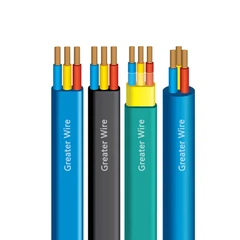
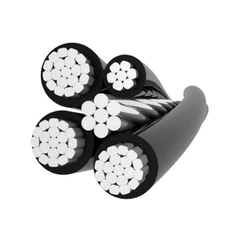
A 6kW solar system is an excellent choice for powering a residential property or small business, providing substantial energy savings while reducing environmental impact. However, understanding how many batteries are required to store the energy generated, and the role of solar cables and wires in the system, is crucial for designing an efficient and safe solar setup. This article explores these aspects in detail.

1. Components of a Solar System
A solar system comprises the following key components:
Solar Panels: These capture sunlight and convert it into electrical energy.
Inverter: Converts the direct current (DC) generated by solar panels into alternating current (AC) for use in appliances.
Batteries: Store excess energy for use during the night or cloudy days.
Solar Charge Controller: Regulates the power going into the battery bank to prevent overcharging.
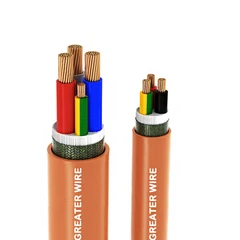
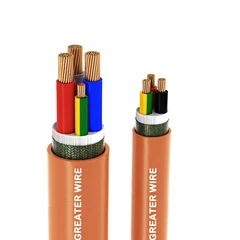
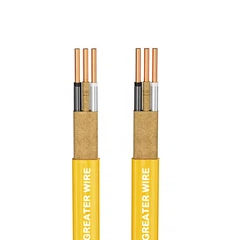
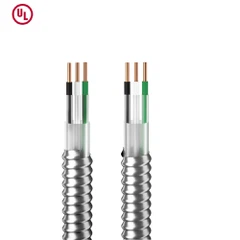
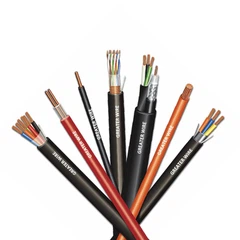
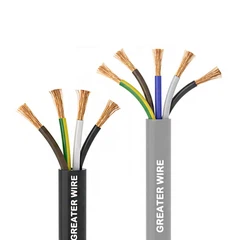
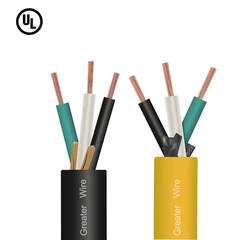
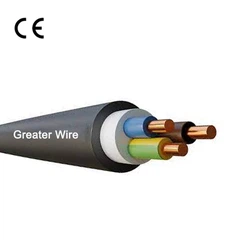
Solar Cables and Wires: Connect all components of the system, ensuring efficient and safe energy transfer.

2. Determining Battery Requirements
To determine how many batteries are needed for a 6kW solar system, consider the following factors:
2.1. Daily Energy Usage
The first step is to calculate your daily energy consumption. A 6kW system produces approximately 24–30 kWh of energy per day, depending on location and sunlight availability. If your daily energy consumption is 25 kWh, you'll need a battery setup that can store this amount.
2.2. Battery Capacity
Battery capacity is measured in kilowatt-hours (kWh). For example, a 12V battery with a 200Ah capacity provides:
Capacity (kWh)=Voltage (V)×Capacity (Ah)/1000=12×200/1000=2.4 kWh.
To store 25 kWh, you would need approximately:
Number of Batteries=Total Energy Storage Required (kWh)/Battery Capacity (kWh).
Using 2.4 kWh batteries:
Number of Batteries=25/2.4≈11 batteries.
2.3. Depth of Discharge (DoD)
Most batteries have a recommended depth of discharge (DoD). For instance, if a battery has an 80% DoD, you can only use 80% of its capacity without damaging it. Accounting for DoD:
Adjusted Capacity per Battery=Battery Capacity×DoD.
For an 80% DoD, a 2.4 kWh battery provides 1.92 kWh usable energy. Thus, you'd need:
Number of Batteries=25/1.92≈13 batteries.

3. Role of Solar Cables and Wires
Solar cables and wires are the lifelines of a solar system. They ensure efficient energy transmission and prevent power loss or system failure. Here's a detailed look at their types, selection criteria, and significance:
3.1. Types of Solar Cables and Wires
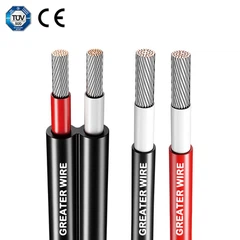
PV (Photovoltaic) Cables: Specifically designed for solar systems, they are weather-resistant and durable.
String Wires: Connect solar panels in series or parallel configurations.
Battery Cables: Connect the battery bank to the charge controller and inverter.
Grounding Wires: Ensure safety by grounding the system.
3.2. Key Features
Insulation: Solar cables must have robust insulation to withstand UV radiation, temperature fluctuations, and moisture.
Flexibility: Flexible wires ease installation and reduce wear over time.
Resistance: Solar wires must resist corrosion and mechanical stress.
3.3. Selecting Solar Cables
Consider the following when selecting solar cables:
Wire Gauge: The gauge determines the wire's capacity to handle current without overheating. Larger systems like 6kW require thicker wires (e.g., 10 AWG or lower).
Voltage Rating: Ensure cables match the voltage of your system. For a 48V battery bank, choose cables rated for at least 60V.
Length: Longer cables experience greater voltage drop. Use thicker wires to minimize this loss.
3.4. Best Practices for Installation
Proper Routing: Avoid sharp bends or contact with rough surfaces to prevent wear.
Secure Connections: Ensure connections are tight and use appropriate connectors to reduce resistance.
Labeling: Label cables for easy identification during maintenance.

4. Designing an Efficient 6kW Solar System
4.1. Battery Configuration
For a 6kW system with a 48V battery bank, you can configure batteries in series and parallel to achieve the desired capacity. For example:
Using 13 batteries (each 12V, 200Ah): Connect four batteries in series to make 48V, then create parallel strings to meet the total storage requirement.
4.2. Solar Cable Layout
Connect solar panels to the charge controller using PV cables.
Link the charge controller to the battery bank with battery cables.
Use inverter cables to connect the battery bank to the inverter.

5. Maintenance Tips
Battery Maintenance
Regularly check electrolyte levels (if using lead-acid batteries).
Inspect terminals for corrosion.
Cable and Wire Maintenance
Inspect for signs of wear or damage.
Ensure all connections remain secure.
System Performance
Monitor energy production and storage efficiency using a solar monitoring system.