























The Current-Carrying Capacity of an SAA Power Cable: A Comprehensive Guide
When selecting the right power cable for electrical installations, understanding its current-carrying capacity is crucial to ensuring safety, performance, and compliance with standards. One common type of power cable used in Australia is the 10mm orange circular 4 core and earth cable, which is particularly favored for its durability and versatility in residential, commercial, and industrial applications.

Understanding Current-Carrying Capacity
The current-carrying capacity of a cable, also known as the ampacity, refers to the maximum amount of current the cable can safely carry without exceeding its temperature rating or causing damage to the insulation. This capacity depends on several factors, including the cable's size, material, insulation type, ambient temperature, installation conditions, and the presence of other cables.
For power cables like the 10mm orange circular 4 core and earth SAA cable, manufacturers design them to meet specific guidelines and standards to ensure they can handle high electrical loads while maintaining safety and efficiency. SAA, which stands for the Standards Association of Australia, plays a vital role in setting these standards, ensuring that electrical cables meet the required quality and safety benchmarks.
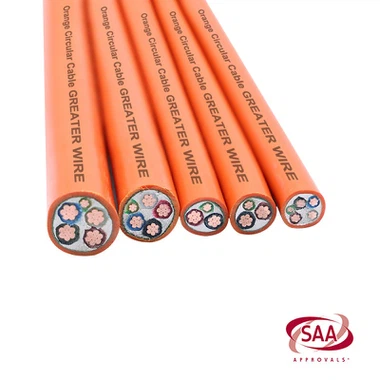
SAA Power Cable Standards
In Australia, cables must adhere to the AS/NZS 3000:2018 (Wiring Rules), a joint standard published by Standards Australia and Standards New Zealand. This standard outlines the installation practices, safety measures, and performance criteria for electrical installations, including current-carrying capacities for various types of cables.
Additionally, cables that meet the SAA certification must pass rigorous testing procedures to ensure they are safe for use in different environments and applications. The 10mm orange circular 4 core and earth cable is one such cable that complies with these standards, making it suitable for a wide range of domestic and industrial electrical applications.

Key Components of the 10mm Orange Circular 4 Core and Earth Cable
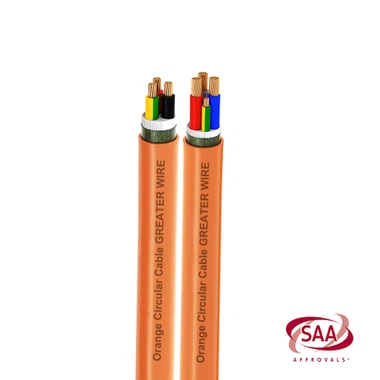
The 10mm orange circular 4 core and earth cable is designed with four individual cores: three phase conductors and one earth conductor. The three phase conductors are used to carry the active electrical current, while the earth conductor provides a safe path for fault currents to prevent electrical shock hazards.
Here are the core components:
1.10mm² Conductor Size: This refers to the cross-sectional area of each conductor, which directly impacts the cable's ability to carry current. A larger conductor size, such as 10mm², allows the cable to carry more current with less resistance, thus reducing the risk of overheating.
2.Insulation Material: The insulation on the cable is typically made from thermoplastic materials like PVC or XLPE (cross-linked polyethylene). These materials help prevent short circuits, insulate the conductors, and ensure that the cable operates at safe temperatures.
3.Earth Conductor: In compliance with safety standards, the earth conductor in the cable provides a direct path for fault currents, which can help protect both people and equipment from electrical hazards.
4.Cable Sheath: The outer sheath of the cable, often orange in color, provides additional protection against mechanical damage, moisture, and chemicals. It also helps to identify the cable type and usage based on the color coding.
Current-Carrying Capacity Calculation
The current-carrying capacity of a 10mm orange circular 4 core and earth SAA power cable is determined by several factors, including the cable's cross-sectional area, insulation type, ambient temperature, installation method, and the type of current it will carry (AC or DC).
1. Conductor Material
Most power cables, including the 10mm orange circular 4 core and earth cable, use copper or aluminum as the conductor material. Copper has a higher conductivity, meaning it can carry more current without overheating. For example, a 10mm² copper conductor typically has a higher current-carrying capacity than an aluminum conductor of the same size.
2. Insulation Type
The insulation material and its thermal rating significantly impact the current-carrying capacity. Common types of insulation include:
PVC (Polyvinyl Chloride): Suitable for lower-temperature environments, PVC-insulated cables have a maximum temperature rating of 70°C to 90°C.
XLPE (Cross-Linked Polyethylene): This insulation type can withstand higher temperatures (up to 90°C or 105°C) and is ideal for use in higher-power applications.
3. Ambient Temperature
Ambient temperature plays a critical role in the performance of a cable. A higher ambient temperature reduces the current-carrying capacity because the cable is exposed to more heat, which can cause insulation degradation and increase the risk of fire. As a rule of thumb, the current-carrying capacity of a cable decreases by approximately 10% for every 10°C increase in ambient temperature above 30°C.
4. Installation Conditions
The installation method significantly affects the heat dissipation of the cable. Cables installed in air (open air) can dissipate heat more easily than cables buried in the ground or in ducts. When cables are grouped together, they also generate more heat, which can reduce their current-carrying capacity.
5. Voltage Rating
While current-carrying capacity is primarily concerned with the current the cable can safely carry, it is also important to consider the voltage rating of the cable. For the 10mm orange circular 4 core and earth cable, the voltage rating is usually 600/1000V, which means the cable can handle up to 1000 volts under normal operating conditions.
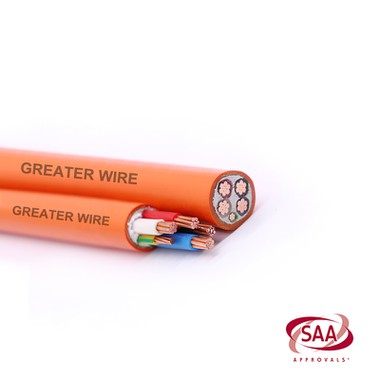
Typical Current-Carrying Capacity for 10mm Orange Circular 4 Core and Earth Cable
Based on the factors outlined above, a 10mm² copper conductor SAA power cable with PVC insulation typically has the following current-carrying capacities:
In open air: Approximately 40-50 Amps.
In conduit: Approximately 35-45 Amps.
In the ground: Approximately 30-40 Amps.
For cables with XLPE insulation, the current-carrying capacity can be slightly higher due to the material's better heat resistance, particularly in environments with high ambient temperatures.
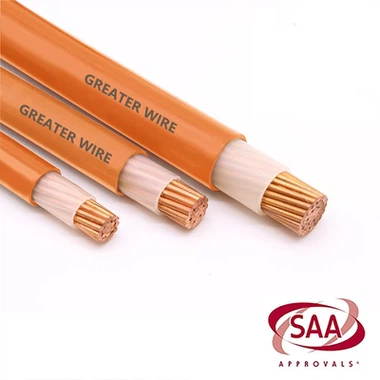
Factors Affecting SAA Cable Ampacity
Several other factors can influence the current-carrying capacity of an SAA power cable:
1.Cable Length: Longer cable runs cause more voltage drop, meaning that over long distances, the cable might need to be oversized to ensure proper voltage at the load end.
2.Cable Configuration: The way cables are laid (whether individually or in a bundle) affects the overall heat dissipation. Cables in close proximity can trap heat and reduce ampacity.
3.Derating Factors: Various derating factors apply, such as ambient temperature, number of conductors in the cable bundle, and the type of installation environment. Derating must be considered to ensure safe operation.

Dongguan Greater Wire & Cable Co., Ltd. is famous for its professional production of Australian SAA certified wires. Our products are not only technologically advanced, but also strictly tested to ensure that they can still perform well in high temperature, humidity and harsh environments, providing solid protection for the project.