


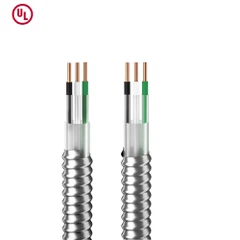
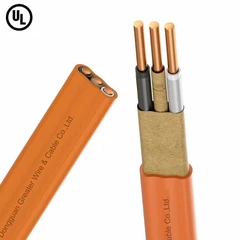
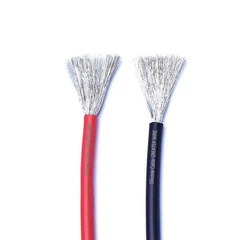
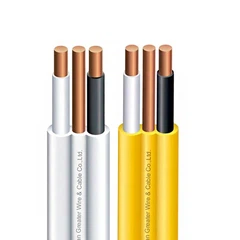
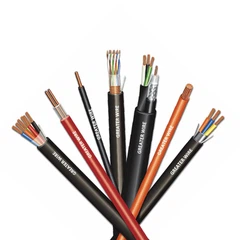
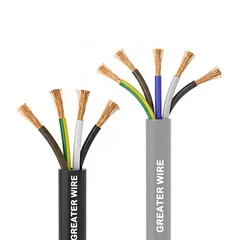
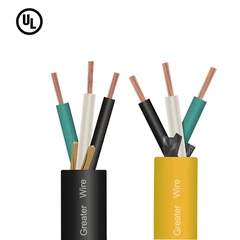
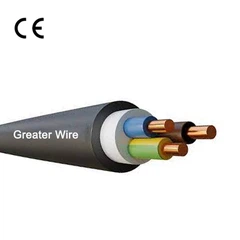

In industrial electrical installations, cable selection involves more than choosing the right conductor size or voltage rating. Electrical contractors, engineers, equipment manufacturers, and procurement teams must also verify that a cable meets the applicable safety standards and is approved for its intended installation.
UL 1277 is an important standard for electrical power and control tray cables in North America. It is particularly relevant when selecting TC-ER (Tray Cable–Exposed Run) cable for industrial machinery, manufacturing facilities, and automated production lines.
But what does UL 1277 actually mean? Does every TC-ER cable comply with this standard? And how does it affect installation, flame performance, and cable selection?
This guide explains the relationship between UL 1277 and TC-ER cable, highlights the requirements buyers should verify, and provides practical guidance for selecting cable solutions for industrial applications.
1. What Is UL 1277?
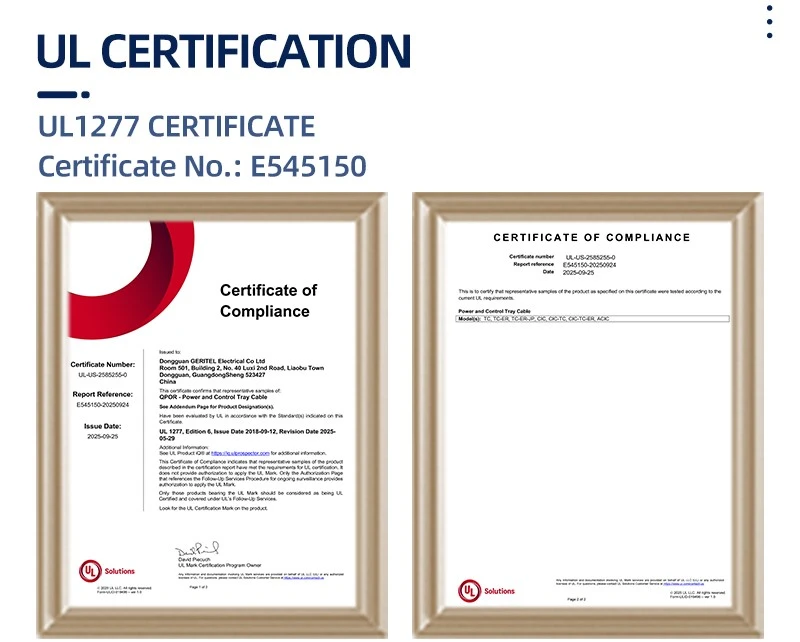
UL 1277 is a safety standard titled Electrical Power and Control Tray Cables with Optional Optical-Fiber Members. Published by UL Standards & Engagement, it covers specified electrical power and control cable constructions intended for use under applicable National Electrical Code (NEC) requirements.
The standard addresses cable assemblies rather than simply the insulation on an individual conductor. Depending on the design, covered cables can contain multiple current-carrying conductors, grounding conductors, and optional optical-fiber members beneath an overall jacket.
For industrial buyers, UL 1277 is relevant because it establishes requirements used to evaluate covered cable products for their designated applications.
What Does UL 1277 Cover?
The standard's scope includes several important aspects of cable construction and intended use:
Electrical construction: Requirements applicable to the covered conductors and cable assembly.
Safety and performance: Tests and construction requirements specified by the standard.
Cable identification: Product designations and certification markings that help identify approved cable types.
Intended installation: Applications governed by the relevant NEC provisions and the product's specific listing.
UL 1277 covers power and control tray cables used in accordance with NEC Article 336 and other applicable provisions, including permitted installations in cable trays, raceways, and certain outdoor locations supported by messenger wire.
The exact installation permissions depend on the product's markings and the applicable code requirements.
For current standard information, see the UL 1277 official standard listing.

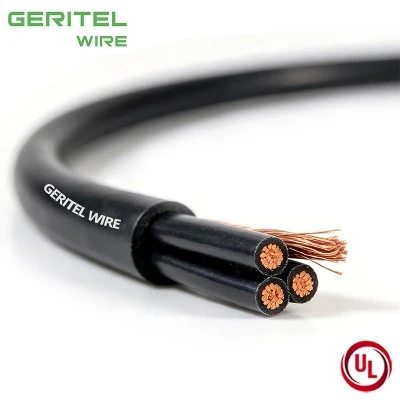
2. What Is TC-ER Cable?
TC-ER stands for Tray Cable–Exposed Run.
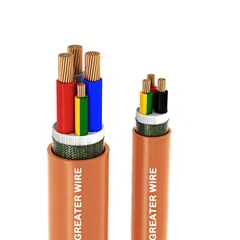
The designation identifies a cable intended for qualifying tray-cable installations and certain permitted exposed-run applications. It is widely used in industrial power and control wiring, especially where cables connect distribution systems to machinery or other equipment.
Traditional Type TC cable is primarily associated with cable-tray installations. The ER designation is important because it identifies a cable that has been evaluated and marked for additional exposed-run use under applicable requirements.
Typical Characteristics of TC-ER Cable
Depending on the specific product, TC-ER cable may have the following characteristics:
Voltage rating: Commonly 600 V, subject to the actual product specification.
Conductors: Copper or other permitted conductor materials, depending on the construction.
Insulation: Materials selected according to the cable's design and ratings.
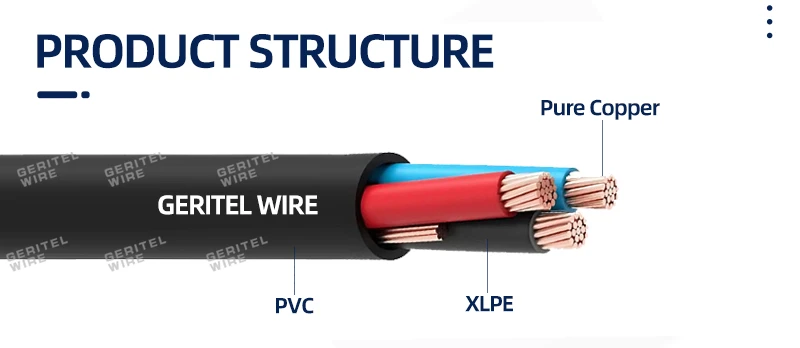
Outer jacket: A protective covering intended to meet the applicable construction requirements.
Conductor configuration: Multiple conductors, with grounding conductors where specified by the product design.
Optional properties: Sunlight resistance, oil resistance, shielding, and other features when specifically provided and marked.
TC-ER cable is commonly used for connections between cable trays and industrial equipment, control panels, motors, and manufacturing machinery.
However, not every cable described as industrial-grade or tray-rated is automatically suitable for exposed-run installation. Buyers should verify the exact cable designation and certification.
3. What Does UL 1277 Mean for TC-ER Cable?
For TC-ER cable, UL 1277 provides the applicable product-standard framework for covered electrical power and control tray-cable constructions. It is an important part of verifying that a cable has been evaluated for its designated use.
Nevertheless, three concepts must be distinguished: the standard, the certification, and the installation rules.
UL 1277 Is the Product Standard
UL 1277 specifies requirements for the cable products within its scope. A manufacturer's claim that a cable meets a standard should be supported by the relevant certification and product documentation.
A cable's appearance, conductor material, or marketing description does not establish compliance.
TC-ER Identifies the Cable Designation
The TC-ER marking identifies the cable as a tray cable with exposed-run suitability under the applicable requirements.
The designation alone should not replace verification of the product's listing. Confirm that the exact cable construction and configuration are covered by the relevant certification.
The NEC Determines Permitted Installation
In the United States, NEC Article 336 addresses Type TC cable installations. The applicable edition, local amendments, circuit conditions, and authority having jurisdiction (AHJ) determine whether a proposed installation is permitted.
For example, TC-ER cable can be used for certain exposed connections between a cable tray and equipment when the applicable conditions are met. This does not grant unrestricted permission to install the cable without mechanical protection in every location.
The key takeaway: UL 1277, TC-ER markings, and NEC installation requirements work together. None should be treated as a blanket approval for every industrial wiring situation.
4. UL 1277 vs. TC-ER: Understanding the Difference
UL 1277 and TC-ER are related, but they do not mean the same thing.
| Item | UL 1277 | TC-ER |
|---|---|---|
| What it is | A safety standard for covered power and control tray cables | A cable designation identifying tray cable with exposed-run suitability |
| Main purpose | Establishes applicable product construction and performance requirements | Identifies the intended cable application |
| Typical relevance | Product evaluation and certification | Cable specification and installation selection |
| Installation relationship | Works with applicable electrical-code requirements | Must be installed according to its listing and applicable code |
| What it does not establish by itself | Universal approval for every installation | Automatic compliance with every requirement or environment |
A cable may be marketed as TC-ER, but buyers should confirm that the specific product carries the required certification. Conversely, a reference to UL 1277 should not be interpreted as proof that every product or installation condition qualifies for exposed-run use.
For procurement teams, this distinction is especially important when reviewing quotations, datasheets, and cable markings.
5. Key Requirements to Check When Selecting UL 1277 TC-ER Cable
A suitable cable must meet the project's electrical, mechanical, environmental, and regulatory requirements. The following checks can help buyers evaluate whether a proposed product is appropriate.
5.1 Voltage Rating
Many industrial TC-ER cables are rated at 600 V, but this should never be assumed without checking the product documentation.
Confirm the system voltage, circuit type, and any equipment-specific requirements before selecting a cable.
5.2 Conductor Size and Configuration
Conductor size affects electrical resistance, voltage drop, and allowable current-carrying capacity. The number of conductors and the presence of grounding conductors also depend on the circuit design.
An 8 AWG Tray Cable may be suitable for a particular power or control circuit, but its suitability depends on the load, installation conditions, applicable ampacity rules, and product ratings.
The wire gauge alone does not determine the correct cable. Engineers must also consider conductor material, ambient temperature, the number of loaded conductors, terminal temperature limitations, and other applicable requirements.
5.3 Temperature Rating
Cable temperature ratings describe the conditions under which the product is designed to operate. They must be considered alongside ampacity requirements and the ratings of connected equipment.
For example, a cable with 90°C-rated insulation does not automatically permit the connected circuit to operate at an ampacity calculated using the 90°C column. Applicable code rules and equipment termination ratings may limit the allowable ampacity.
Always check the actual temperature markings and applicable installation requirements.
5.4 Environmental Resistance
Industrial installations may expose cables to sunlight, oil, moisture, chemicals, abrasion, vibration, and temperature variation.
These properties are not guaranteed simply because a cable is listed to UL 1277. Confirm the relevant environmental markings and manufacturer specifications for the intended installation.
5.5 Mechanical Protection
TC-ER cable is intended for certain exposed-run installations, but the required protection depends on the application and applicable rules.
Consider the risk of impact, crushing, abrasion, and damage from machinery or moving equipment. Additional protection may be necessary where the cable is exposed to physical hazards.
6. Does UL 1277 Guarantee Flame Resistance?
UL 1277 includes applicable safety and performance requirements, but buyers should not assume that every cable meeting this standard satisfies every possible flame-test or fire-performance specification.
Different tests evaluate different characteristics. A cable's flame classification should be verified separately when the project specifies a particular test method or rating.
Understanding VW-1
A VW-1 Tray Cable is a phrase buyers may encounter when searching for industrial cables, but it is important to understand the distinction between a flame-test designation and a complete cable listing.
VW-1 is a vertical-wire flame-test designation associated with specific requirements. It is not interchangeable with every vertical-tray flame test or other flame-spread classification.
A cable passing VW-1 does not automatically satisfy every flame-performance requirement for cable trays, industrial facilities, or other specialized environments.
When a project requires a specific tray flame test, check the cable datasheet and certification documentation for that exact requirement.
7. UL 1277 TC-ER Cable vs. Industrial THHN Cable
Buyers sometimes compare TC-ER cable with Industrial THHN Cable when sourcing materials for factory wiring.
Although these products may be used in related industrial applications, they are not interchangeable in every installation.
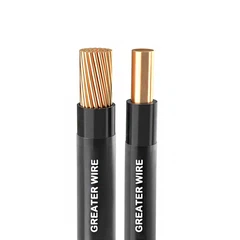
THHN identifies a type of conductor insulation designation under the applicable North American product standards. TC-ER identifies a complete tray-cable assembly with exposed-run suitability when appropriately listed and marked.
| Comparison | UL 1277 TC-ER Cable | Individual THHN Wire |
|---|---|---|
| Product form | Typically a multiconductor cable assembly | Typically a single insulated conductor |
| Main use | Permitted tray and qualifying exposed-run power or control wiring | Individual conductor installations in permitted wiring methods |
| Outer jacket | Usually includes an overall cable jacket | Generally lacks the same overall multiconductor cable jacket |
| Installation requirements | Must comply with its listing and applicable TC/TC-ER rules | Must comply with the applicable conductor and wiring-method rules |
| Selection considerations | Cable configuration, listing, voltage, temperature, and environment | Conductor size, insulation rating, raceway or other permitted wiring method, and environment |
Some tray cables use conductors with THHN or THWN-2 insulation, depending on their construction. However, the presence of THHN-insulated conductors does not make the entire cable assembly a listed TC-ER cable.
When a project requires TC-ER, selecting individual THHN conductors as a substitute without verifying the permitted wiring method can lead to specification and compliance problems.
8. Applications in Factory Automation and Industrial Wiring
Factory automation systems depend on reliable connections between electrical distribution equipment, control panels, motors, sensors, and production machinery.
Where permitted by the cable's listing and the applicable code, TC-ER cable can help simplify fixed industrial wiring by providing a cable assembly suited to qualifying tray and exposed-run applications.
Factory Automation Wiring
A Factory Automation Wiring Cable specification may cover power connections, control circuits, or connections between industrial equipment. The correct cable depends on the electrical load, routing, mechanical environment, and whether the application involves fixed installation or continuous movement.
For fixed wiring, TC-ER may be a suitable option when the product's ratings and installation permissions match the project requirements.
For moving machine parts or continuous-flex applications, a cable specifically designed and rated for repeated flexing may be required. TC-ER should not automatically be treated as a continuous-flex cable.
Industrial Control Wiring
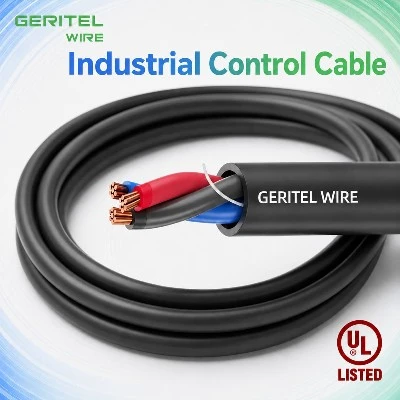
Industrial Control Wiring connects equipment such as control panels, contactors, motor starters, and industrial machines.
TC-ER cable may be appropriate for certain control circuits, provided that the circuit's voltage, current, conductor configuration, and installation method are covered by the cable's ratings and applicable rules.
Where sensitive signals or communication systems are involved, shielding and electromagnetic compatibility may also influence cable selection.
Mining and Heavy Industrial Equipment
A Mining Power Cable specification requires careful consideration of the operating environment, including abrasion, impact, moisture, vibration, and any special regulatory requirements.
A standard UL 1277 TC-ER listing does not automatically establish suitability for underground mining, portable mining equipment, or other specialized mining applications.
Before selecting a cable for mining machinery, verify the required cable type, equipment compatibility, applicable mining regulations, and any additional approvals specified by the project.

9. How to Verify UL 1277 Compliance Before Purchasing
Procurement teams can reduce the risk of unsuitable substitutions by requesting clear product documentation before approving a quotation.
Use the following checklist when reviewing a proposed TC-ER cable.
Confirm that the product's exact construction is covered by the required certification.
Check the cable's voltage rating and conductor configuration.
Verify conductor sizes and grounding-conductor requirements.
Review the temperature rating and environmental markings.
Confirm the exposed-run designation and permitted installation conditions.
Verify any specified flame-test, sunlight-resistance, or oil-resistance requirements.
Request the manufacturer's datasheet and applicable certification information.
Confirm that the product meets the adopted electrical code and project specifications.
Do not rely solely on a supplier's statement that a cable is UL compliant. Where certification is mandatory, check the applicable UL certification records and ensure that the exact product is covered.
10. Frequently Asked Questions
Is every TC-ER cable certified to UL 1277?
Not automatically. UL 1277 is the relevant product standard for covered power and control tray cables, but buyers should verify the exact product's listing, certification, and markings.
Can TC-ER cable be installed outside a cable tray?
Certain properly listed and marked TC-ER cables can be used for permitted exposed-run installations. The installation must meet the applicable NEC requirements and any relevant restrictions on physical protection and routing.
Does UL 1277 mean a cable is suitable for outdoor use?
Not by itself. Outdoor suitability depends on the cable's specific ratings and markings, such as sunlight resistance where required, as well as the installation conditions and applicable code.
Is VW-1 sufficient for every industrial tray installation?
No. VW-1 is a specific flame-test designation and does not automatically satisfy every cable-tray flame-performance requirement. Check the exact test classification required by the project.
Can individual THHN conductors replace TC-ER cable?
Not as a universal substitute. Individual THHN conductors and a complete TC-ER cable assembly have different construction and installation requirements. The permitted wiring method must match the product being used.
Is UL 1277 TC-ER cable suitable for mining equipment?
Not necessarily. Specialized mining applications may require cable types, mechanical properties, or approvals beyond those established by a standard tray-cable listing. Confirm the equipment manufacturer's requirements and the applicable mining regulations.
Conclusion
UL 1277 is an important standard for evaluating electrical power and control tray cables, while TC-ER identifies cable intended for qualifying exposed-run applications. Understanding the relationship between the standard, the cable's certification, and the applicable NEC requirements helps engineers, contractors, and purchasing teams make better-informed decisions.
Before ordering, verify the exact product listing, voltage and temperature ratings, conductor configuration, environmental properties, and permitted installation methods. For specialized applications such as factory automation, continuous-flex machinery, or mining equipment, confirm that the cable is specifically suitable for the intended service.
Source for Further Reference
For the standard's scope and current status, consult the official UL 1277 listing from UL Standards & Engagement. For installation decisions, refer to the applicable edition of NFPA 70 (NEC), the cable's certification documentation, and the authority having jurisdiction.
Find the Right Industrial Cable Solution with GERITEL WIRE
Choosing a cable that matches your application, installation method, and certification requirements can help simplify procurement and support reliable industrial operations. GERITEL WIRE, backed by Dongguan Greater Wire & Cable Co., Ltd., welcomes inquiries from electrical distributors, engineering contractors, equipment manufacturers, and industrial buyers seeking cable solutions for factory automation, control wiring, and demanding industrial environments. Share your required cable type, conductor size, voltage and temperature ratings, operating conditions, and target-market approvals with our team. We can discuss your specifications and help identify suitable product options for your project. Contact GERITEL WIRE to discuss your requirements and request a quotation.
Dongguan Greater Wire & Cable Co., Ltd.
Tel/WhatsApp/Wechat: +86 136 6257 9592
Tel/WhatsApp/Wechat: +86 135 1078 4550
Email: manager01@greaterwire.com
Website: www.greaterwire.com