


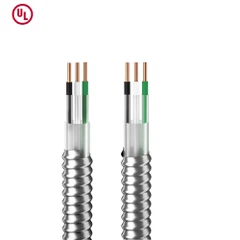
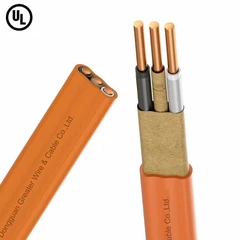
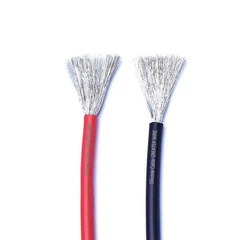
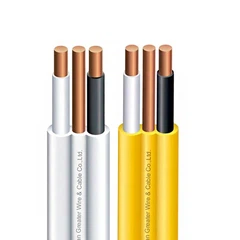
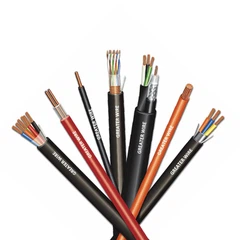
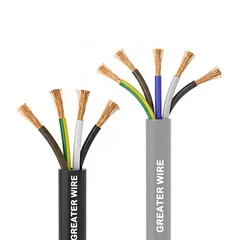
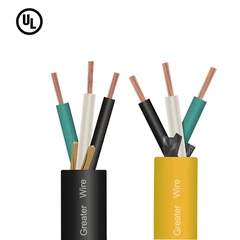
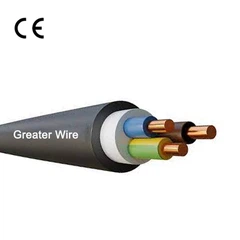

In industrial electrical installations, choosing the right cable involves more than checking voltage, conductor size, or insulation material. Engineers, electrical contractors, equipment manufacturers, and procurement teams must also understand the applicable certification standards and installation requirements.
Type TC and Type CIC cables are both used in industrial wiring, but they belong to different North American standards frameworks. Type TC generally refers to Tray Cable, while CIC stands for Control and Instrumentation Cable under Canadian standards. Although some cable products carry both designations, the two terms are not interchangeable in every application.
This guide explains the differences between Type TC and CIC cable, compares their standards and typical applications, and outlines the key checks buyers should make before placing an order.
1. What Is Type TC Cable?
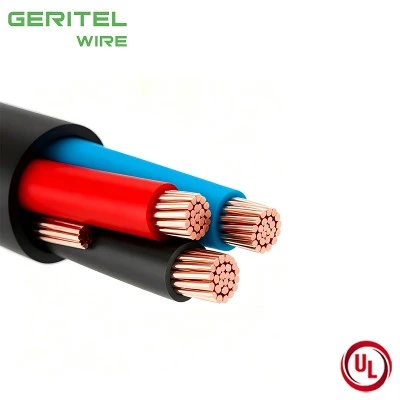
Type TC stands for Tray Cable. It is a category of electrical cable designed for permitted industrial installations, particularly in cable trays. Depending on its construction, listing, and markings, a Type TC cable may be used for power distribution, motor connections, control circuits, or other applications covered by the relevant standard.
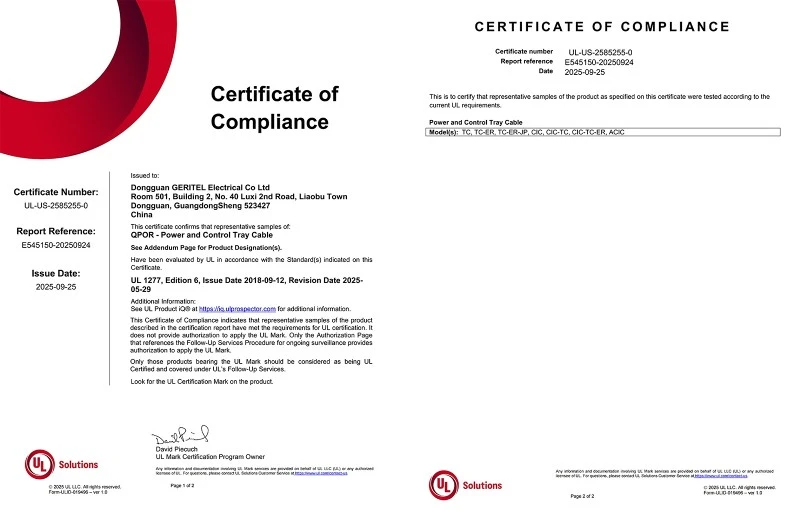
In the United States, Type TC power and control cables are commonly evaluated under UL 1277, Electrical Power and Control Tray Cables with Optional Optical-Fiber Members. Their installation is governed by the applicable requirements of the National Electrical Code (NEC), including Article 336.
Common Characteristics of Type TC Cable
Primary purpose: Industrial power and control wiring.
Typical voltage rating: Many products are rated at 600 V, although the actual rating must be verified.
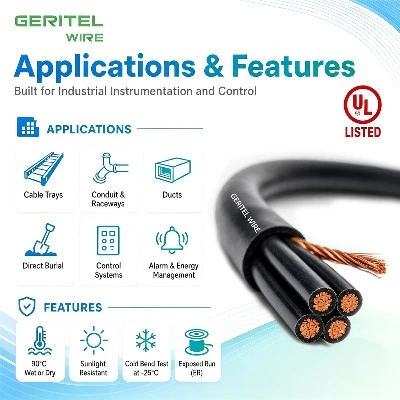
Installation: Cable trays and other permitted wiring methods specified by the product listing and applicable electrical code.
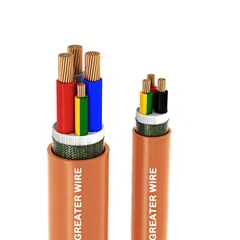
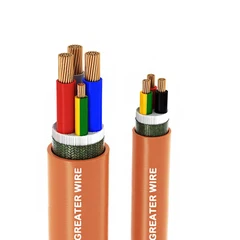
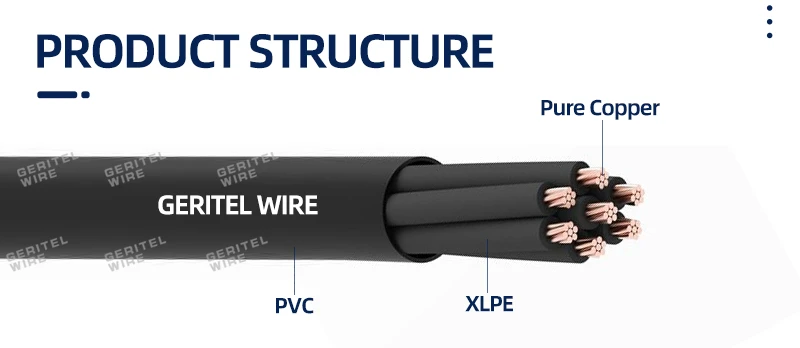
Construction: Commonly includes copper or aluminum conductors, insulation, fillers where needed, and an overall protective jacket.
Optional features: Depending on the product, these may include sunlight resistance, oil resistance, shielding, direct-burial suitability, and enhanced mechanical protection.
One important distinction is the TC-ER designation. The letters ER stand for Exposed Run. A properly listed and marked TC-ER cable can qualify for certain exposed-run installations outside cable trays under applicable code conditions. This designation does not mean the cable can be installed without mechanical protection in every environment.
For procurement teams, checking whether the specification requires Type TC or TC-ER is essential because the two designations can have different installation implications.

2. What Is CIC Cable?
CIC stands for Control and Instrumentation Cable in the Canadian standards system. Under CSA C22.2 No. 239, CIC identifies unarmoured control and instrumentation cables, while ACIC identifies armoured versions.
These cables are commonly used to connect sensors, control panels, monitoring equipment, and other industrial devices. Their construction may include multiple insulated conductors, twisted pairs, individual or overall shielding, and an outer jacket, depending on the intended application.
Common Characteristics of CIC Cable
Primary purpose: Control, instrumentation, and related industrial signal wiring.
Standards framework: CSA C22.2 No. 239 for control and instrumentation cables.
Voltage rating: Available ratings depend on the specific product; the standard covers several voltage classes up to 1,000 V.
Construction: May be shielded or unshielded, jacketed or unjacketed, and designed with different insulation systems.
Installation: Must comply with the applicable Canadian Electrical Code (CEC) requirements and the product's certification and markings.
CIC cable is particularly relevant in process plants, manufacturing facilities, and industrial automation systems where reliable control signals and instrumentation connections are important.
However, not every CIC cable is automatically suitable for every cable-tray installation. Buyers must confirm the applicable tray-cable certification and installation permissions rather than relying on the CIC designation alone.
3. Type TC vs. CIC Cable: Key Differences
The main difference is the standards framework and the cable's designated application. Type TC is associated with tray cable, while CIC identifies a Canadian category of control and instrumentation cable.
| Comparison | Type TC Cable | CIC Cable |
|---|---|---|
| Full name | Tray Cable | Control and Instrumentation Cable |
| Primary standards framework | U.S. UL/NEC system; UL 1277 commonly applies to power and control tray cables | Canadian CSA/CEC system; CSA C22.2 No. 239 applies to CIC control and instrumentation cables |
| Typical application | Industrial power and control wiring | Industrial control, instrumentation, and signal wiring |
| Common voltage rating | Often 600 V, depending on the product | Multiple ratings are available, depending on the product |
| Conductor configuration | Single-conductor or multiconductor constructions, depending on the product | Commonly multiconductor constructions, including shielded or unshielded designs |
| Cable tray suitability | Depends on the applicable Type TC listing and installation rules | Must be verified against the relevant CSA tray-cable certification and installation rules |
| Exposed-run suitability | Requires the appropriate TC-ER designation and compliance with applicable conditions | Must not be assumed from the CIC designation alone |
| Best selection criterion | Intended circuit, installation method, and required listing | Intended circuit, installation method, and required certification |
Important: These are general distinctions, not universal construction or performance specifications. A product may be certified under more than one standard, and actual ratings vary by design.
For example, a cable marked for both CSA Type TC and CIC applications may satisfy requirements relevant to both designations. This does not mean that every Type TC cable is CIC-certified or that every CIC cable qualifies as a U.S. Type TC cable.
4. Which Standards Apply to Type TC and CIC Cable?
Understanding the standards behind each designation helps buyers avoid certification mismatches.
UL 1277: U.S. Power and Control Tray Cables
UL 1277 covers electrical power and control tray cables, including applicable cable constructions with optional optical-fiber members. Type TC products evaluated under this standard are intended for installation in accordance with the relevant NEC requirements and their product markings.
When reviewing a Type TC datasheet, confirm:
The applicable UL listing and cable designation.
The rated voltage and conductor sizes.
The insulation and jacket materials.
The temperature and environmental ratings.
Whether TC-ER or other specific installation permissions are required.
A reference to UL 1277 alone should not be treated as permission for every exposed-run, outdoor, hazardous-location, or direct-burial application.
CSA C22.2 No. 230: Canadian Tray Cables
CSA C22.2 No. 230 covers tray cables intended for use in accordance with the Canadian Electrical Code, Part I.
This standard is relevant when the project specification calls for a Canadian-certified tray cable. It addresses cable requirements beyond basic conductor and insulation construction, including applicable tests and product markings.
The key point is that a cable's suitability for a Canadian tray installation depends on its certification and the installation conditions specified by the CEC.
CSA C22.2 No. 239: Control and Instrumentation Cables
CSA C22.2 No. 239 covers multiconductor control and instrumentation cables, including applicable thermocouple and thermocouple-extension cables. Under this standard, CIC identifies unarmoured constructions, while ACIC identifies armoured constructions.
For buyers, this standard is especially relevant when selecting cables for instrumentation loops, control panels, industrial monitoring systems, and process automation.
A cable meeting CSA C22.2 No. 239 is not automatically equivalent to a cable meeting UL 1277. Each standard addresses its own requirements, and project acceptance depends on the applicable electrical code and certification.
5. Can One Cable Be Both Type TC and CIC?
Yes. Certain products are designed and certified for both U.S. and Canadian applications. Manufacturers may identify these products as Type TC/CIC or use equivalent markings that explicitly indicate the applicable approvals.
A dual-certified cable can help simplify purchasing for projects serving both markets, provided the product meets the requirements of each installation.
Before specifying a dual-certified cable, verify:
Certification: Confirm that the manufacturer explicitly identifies both required certifications.
Voltage and temperature: Check the actual ratings for the specific cable construction.
Application: Confirm that the cable is suitable for the intended power, control, or instrumentation circuit.
Installation method: Check whether the product is approved for the proposed cable tray, exposed-run, outdoor, or other installation.
Environmental conditions: Verify any required sunlight, oil, moisture, flame, cold-temperature, or mechanical-resistance ratings.
Project approval: Confirm compliance with the adopted electrical code, project specifications, and authority having jurisdiction (AHJ) requirements.
Do not assume that a cable is dual-certified simply because its manufacturer sells similar products in both countries. The certification must apply to the exact product being purchased.
6. How to Choose the Right Cable for Your Application
The most suitable cable depends on the circuit, installation environment, and regulatory requirements-not just the product name.
For Industrial Power and Control Systems
Type TC cable is often a suitable starting point for industrial power and control circuits installed in permitted cable trays. If the cable must leave the tray and run directly to equipment, determine whether the installation requires a TC-ER-listed product.
Also consider the motor's electrical requirements, the cable's current-carrying capacity, grounding arrangements, and any special requirements for variable-frequency drives (VFDs).
For Instrumentation and Automation
CIC cable may be appropriate for Canadian control and instrumentation applications. Where low-level signals or sensitive measurements are involved, shielding, pair configuration, and signal compatibility may be important.
For example, instrumentation cables connecting sensors to control systems may require shielding to reduce electromagnetic interference. The correct construction depends on the signal type, grounding arrangement, installation environment, and equipment manufacturer's recommendations.
For Mining and Other Demanding Industrial Environments
Mining projects can involve abrasion, impact, vibration, moisture, chemicals, temperature variation, and restricted installation spaces. The required cable may therefore need more than a standard tray-cable designation.
When sourcing Mining Equipment Cable or other Mining Electrical Cable products, buyers should identify the actual equipment, voltage, mechanical stresses, flexibility requirements, and applicable mining regulations.
A standard Type TC or CIC cable should not automatically be treated as a mining-duty or portable mining cable. Equipment-specific requirements and local regulations may call for a different cable type.
For Energy Storage Systems
Battery energy storage projects also require application-specific cable selection. An ESS Battery Cable or BESS Wiring Cable may need to meet requirements for DC voltage, conductor sizing, temperature, insulation, routing, and the installation environment.
Type TC and CIC are not universal substitutes for battery cables. Confirm whether the cable is intended for battery interconnections, power conversion equipment, auxiliary control circuits, or monitoring signals. Each function can have different electrical and certification requirements.
7. Temperature Ratings and Flame Ratings: What Should Buyers Check?
Cable designations do not tell the whole story. Two products with similar appearances may have different temperature ratings, flame-test results, and environmental suitability.
Understanding a 90°C Rating
A 90°C Rated Cable has a specified temperature rating under defined conditions. However, a 90°C marking does not mean the cable can carry any desired current at that temperature.
Allowable ampacity depends on conductor size, insulation, installation method, ambient temperature, the number of loaded conductors, and applicable code requirements. Where a cable has different wet-location and dry-location ratings, the relevant rating must also be checked.
Always review the product datasheet and applicable ampacity tables before finalizing the conductor size.
Understanding VW-1
A VW-1 Rated Cable has met the applicable vertical-wire flame-test requirements associated with the VW-1 designation.
VW-1 is a specific flame-test classification. It should not be interpreted as proof that a cable meets every flame, smoke, or fire-performance requirement for cable trays, buildings, mining facilities, or other specialized environments.
Where a project specifies FT4, a vertical tray flame test, limited-smoke performance, or another particular fire classification, verify that the exact cable has the required rating. Different test methods are not automatically interchangeable.
8. Common Purchasing Mistakes to Avoid
Even experienced procurement teams can encounter problems when cable descriptions are incomplete or when the destination market is not identified early enough.
Mistake 1: Treating TC and CIC as interchangeable terms.
They represent different designations within North American standards frameworks. Confirm the specific product certification and application before ordering.
Mistake 2: Assuming a voltage rating guarantees installation approval.
A 600 V rating does not automatically establish suitability for a particular cable tray, exposed run, hazardous location, or environmental condition.
Mistake 3: Ignoring temperature and flame ratings.
A cable may meet the electrical requirements but fail to satisfy a project's temperature, oil-resistance, sunlight-resistance, or flame-test specifications.
Mistake 4: Selecting cable solely by its name.
Terms such as mining cable, battery cable, instrumentation cable, and tray cable describe different application needs. The exact construction and certification must match the intended service.
Mistake 5: Failing to confirm the destination market.
A U.S. project may require a particular UL listing, while a Canadian project may require the relevant CSA certification. Projects spanning both markets may need dual-certified products.
9. Type TC vs. CIC Cable: Final Recommendation
Type TC and CIC cables serve related but distinct purposes. Type TC is primarily associated with tray cable applications, including industrial power and control wiring, while CIC identifies Canadian control and instrumentation cable constructions.
For the United States, review the applicable UL listing and NEC installation requirements. For Canada, verify the relevant CSA certification and CEC requirements. For cross-border projects, confirm that the exact cable carries all necessary approvals.
The best purchasing decision starts with five questions: What circuit will the cable serve? What voltage and temperature ratings are required? Where will it be installed? Which environmental and flame ratings apply? Which certifications does the destination market require?
Answering these questions before requesting a quotation can reduce specification errors, avoid unsuitable substitutions, and improve project planning.

Work with GERITEL WIRE for Your Industrial Cable Requirements
Selecting the right cable is an important step toward reliable industrial operation. GERITEL WIRE, backed by Dongguan Greater Wire & Cable Co., Ltd., welcomes inquiries from distributors, contractors, equipment manufacturers, and industrial procurement teams seeking cable solutions for demanding applications. Whether your project involves tray wiring, control and instrumentation, mining equipment, or energy storage systems, share your technical specifications, target market, required approvals, and quantity with our team. We can discuss your requirements and help identify suitable product options based on the intended application. Contact GERITEL WIRE to discuss your next cable sourcing project and request a quotation.
Dongguan Greater Wire & Cable Co., Ltd.
Tel/WhatsApp/Wechat: +86 136 6257 9592
Tel/WhatsApp/Wechat: +86 135 1078 4550
Email: manager01@greaterwire.com
Website: www.greaterwire.com