























In today's world, the use of orange circular cables has become commonplace in various industrial, commercial, and residential applications. These cables are often preferred for their high visibility, flexibility, and durability. However, when these cables are installed outdoors or in environments where they are exposed to the elements, a key consideration is their ability to withstand ultraviolet (UV) radiation from sunlight. This article will delve into whether orange circular cables are UV-resistant and suitable for outdoor use, and will also explore factors such as the SAA certificate, Australia standards, and AS/NZS 5000.1 that govern the design and performance of such cables.


Understanding the Orange Circular Cable
Before addressing the specific issue of UV resistance, it's essential to understand what an orange circular cable is and what it's typically used for.
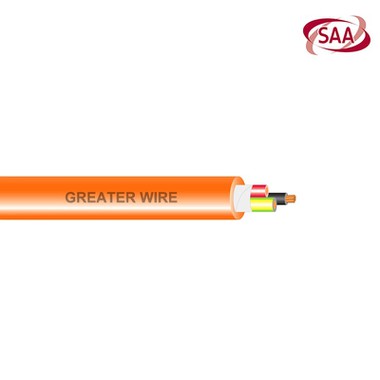
An orange circular cable is a type of electrical cable that is easily identifiable by its bright orange outer jacket. The cable consists of the following key components:
Conductors: These are typically made of copper or aluminum and are responsible for carrying electrical current. Copper conductors are commonly used due to their superior conductivity.
Insulation: Surrounding the conductors, the insulation serves to prevent electrical shorts and to protect the conductors from environmental factors. Common insulation materials include PVC (polyvinyl chloride), XLPE (cross-linked polyethylene), and various rubber-based compounds.
Jacket: The outer jacket is the outermost protective layer that shields the cable from external environmental factors, including mechanical damage, moisture, and chemicals. In the case of orange circular cables, the outer jacket is typically made from materials like PVC, TPE (thermoplastic elastomer), or rubber, which provide varying degrees of durability and resistance to external conditions.
Shielding: Some orange circular cables are equipped with additional layers of shielding or armoring to provide extra protection against electromagnetic interference (EMI) and mechanical stress.
These cables are widely used in applications that require high visibility, reliable performance, and flexibility, such as power distribution, safety circuits, emergency systems, and heavy machinery installations.
What Is UV Radiation and How Does It Affect Cables?
UV radiation is a component of sunlight that has higher energy than visible light. While UV radiation plays an essential role in life on Earth, it can also cause significant damage to materials that are exposed to it over time. Cables that are exposed to UV radiation for prolonged periods can suffer from:
Degradation of the Jacket Material: Prolonged exposure to UV radiation can cause the outer jacket of the cable to become brittle, cracked, or discolored. This degradation reduces the effectiveness of the outer protective layer, exposing the internal components of the cable to environmental elements like moisture, dust, and dirt.
Loss of Flexibility: Materials like PVC and some types of rubber can lose their flexibility when exposed to UV rays. As the jacket becomes harder, the cable may lose its ability to bend and flex properly, leading to installation challenges and an increased risk of mechanical failure.
Reduced Lifespan: UV damage can cause the cable to degrade faster than it would under normal conditions, reducing the service life of the cable and potentially leading to premature failures.
As such, UV resistance is a crucial factor in determining whether a cable is suitable for outdoor use or in sunlight-exposed environments.

UV Resistance of Orange Circular Cables
Whether an orange circular cable is UV-resistant depends primarily on the materials used for its outer jacket and insulation. Different materials exhibit different levels of resistance to UV radiation.
1. PVC (Polyvinyl Chloride) Insulation and Jacket
PVC is one of the most commonly used materials for the insulation and outer jackets of cables, including orange circular cables. It is inexpensive, widely available, and offers good electrical insulation properties. However, PVC is generally not highly UV-resistant. Over time, exposure to sunlight can cause PVC jackets to break down, becoming brittle, cracked, or discolored. This is particularly problematic for outdoor applications where the cable is exposed to the sun.
To improve the UV resistance of PVC-insulated cables, UV stabilizers can be added to the PVC formulation during manufacturing. These stabilizers help protect the cable from the harmful effects of UV radiation, but even with these additives, PVC may still degrade more quickly than other materials under long-term UV exposure.
For outdoor use, cables with PVC jackets are generally suitable for environments where they are not exposed to direct sunlight for extended periods. However, for applications where the cable will be exposed to constant or heavy sunlight, other materials may be a better choice.
2. XLPE (Cross-Linked Polyethylene) Insulation
XLPE is another commonly used insulation material for orange circular cables, particularly in applications where higher performance is required. XLPE has better resistance to heat and chemicals compared to PVC, and it can handle higher temperatures. While XLPE has some inherent resistance to UV radiation, it is still susceptible to UV degradation when exposed to prolonged direct sunlight. For this reason, XLPE-insulated cables may require an additional UV-resistant outer jacket to protect the cable from sunlight exposure.
However, XLPE cables are often combined with UV-resistant coatings or outer jackets to improve their overall performance in outdoor environments. These coatings are typically made from materials like TPE (thermoplastic elastomer) or rubber, which offer enhanced UV resistance and durability in harsh outdoor conditions.
3. Rubber and TPE (Thermoplastic Elastomer) Jackets
Rubber-based materials, including EPDM (ethylene propylene diene monomer) and SBR (styrene-butadiene rubber), are highly resistant to UV radiation and are often used for outdoor cables. Rubber jackets are more flexible and durable than PVC jackets, and they can resist cracking, discoloration, and brittleness caused by UV exposure.
TPE jackets, often used in cables requiring greater flexibility, are also highly resistant to UV radiation. These materials are commonly used for cables that need to withstand harsh outdoor conditions, such as those exposed to direct sunlight, extreme temperatures, or chemical exposure.
For outdoor applications, cables with rubber or TPE jackets are typically the best choice in terms of UV resistance and overall durability. They provide the required protection against UV damage, ensuring that the cable can maintain its structural integrity and function properly over extended periods of exposure to sunlight.

Standards for UV-Resistant Cables
To ensure that cables are suitable for outdoor use, manufacturers must adhere to various standards and certifications that govern their performance in harsh environments. In Australia and New Zealand, these standards include the SAA certificate, Australia standard, and AS/NZS 5000.1, which outline requirements for materials, construction, and testing of electrical cables.
1. SAA Certificate
The SAA certificate is a certification that ensures the cable meets the relevant safety standards for use in Australia and New Zealand. For cables intended for outdoor use, the SAA certificate confirms that the cable has been tested to ensure its UV resistance, among other environmental factors, and can safely be used in conditions where it may be exposed to sunlight.
2. Australia Standards
Australian standards, such as AS/NZS 5000.1, provide guidelines for the construction and performance of electrical cables, including their UV resistance. Cables designed for outdoor applications are required to meet certain UV resistance standards to ensure that they will not degrade when exposed to sunlight for prolonged periods.
3. AS/NZS 5000.1
The AS/NZS 5000.1 standard specifies the performance requirements for cables used in low-voltage electrical installations, ensuring that cables meet the required mechanical, electrical, and environmental properties, including resistance to UV radiation. This standard provides valuable guidance when selecting orange circular cables for outdoor use, particularly in applications where they will be exposed to sunlight.